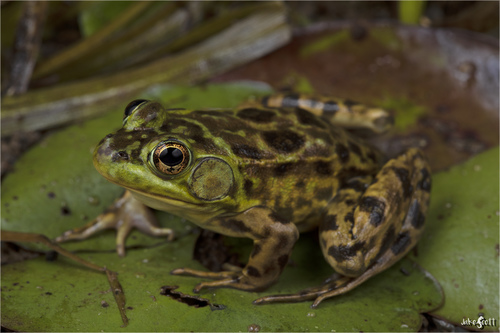
Mink Frog
Lithobates septentrionalis
Often called the 'North Frog,' this aquatic specialist is famous for its unique onion-like scent and rhythmic hammering call. It is a master of camouflage, perfectly blending into the lily pads of northern wilderness ponds.
Quick Identification
Size
4.5 to 7.6 cm (1.8 to 3.0 inches); approximately 20 to 50 grams
Colors
Olive to brownish-green with dark, irregular mottling or large spots. The belly is creamy white or pale yellow. Breeding males often feature a bright yellow throat.
Key Features
- Distinctive musky scent similar to rotting onions when handled
- Interrupted or entirely absent dorsolateral folds along the back
- Dark mottling on hind legs that does not form distinct bands
- Large tympanum (ear drum) compared to eye size
When You’ll See Them
Behavior
The Mink Frog is a highly aquatic species that rarely ventures far from the water's edge. Unlike many other frogs that may travel through damp grass or woods, the Mink Frog prefers to stay semi-submerged or perched on floating vegetation. They are famously shy and alert; at the slightest sign of a predator or a human footfall, they will dive into the water with a quick splash, often remaining hidden at the bottom for several minutes.
These frogs are known for their social 'chorusing' during the summer months. The call of a male Mink Frog is quite distinct, sounding more like a rapid, rhythmic 'clucking' or the sound of two pieces of wood being struck together. This 'hammering' sound is a staple of northern wetlands during the breeding season. Because they are so tied to permanent water, they are excellent indicators of local water quality and ecosystem health.
EverydayEarth exclusive
Camera Tips
Capturing a Mink Frog on camera requires a specialized setup focused on their favorite basking spots. Because they are almost entirely aquatic, your camera should be mounted very low to the ground or even on a floating platform at the water's edge. Aim your lens toward a cluster of lily pads or floating logs approximately 3 to 5 feet away. This is where they spend the majority of their daylight hours sunning themselves to regulate their body temperature.
Since these frogs are diurnal and love the sun, lighting is your biggest challenge. Direct sunlight hitting the water can cause significant glare that washes out the frog's intricate mottled patterns. To counter this, position your camera with the sun at your back, or use a polarizing filter if your camera housing allows it. Setting your camera to a higher shutter speed is also recommended, as it will help freeze the action if the frog suddenly leaps into the water, resulting in a crisp 'splash' photo rather than a blur.
While you can't use traditional bait for a Mink Frog, you can use light to your advantage. If you are setting your camera to run into the evening, placing a small, low-intensity LED light near your 'stage' area can attract the moths and flies that Mink Frogs love to eat. This creates a natural hunting ground that will keep the frog in the camera's field of view for longer periods. During the day, the best 'lure' is simply a quiet environment; Mink Frogs have excellent hearing, so avoid placing cameras in high-traffic areas where human footsteps might keep them underwater.
For the best results, use a camera with a fast trigger speed and set it to take short video clips (10-15 seconds). This allows you to capture the frog's unique behavior, such as its 'gulping' throat movements or the way it uses its front limbs to tuck food into its mouth. In terms of timing, late June through July is the peak of their activity when the water lilies are in full bloom, providing the perfect natural backdrop for your shots.
Similar Species
Species that look similar or are commonly confused with Mink Frog.
Frequently Asked Questions
Record Mink Frog at your habitat
Connect a camera to start building your own species record — AI identifies every visitor automatically.