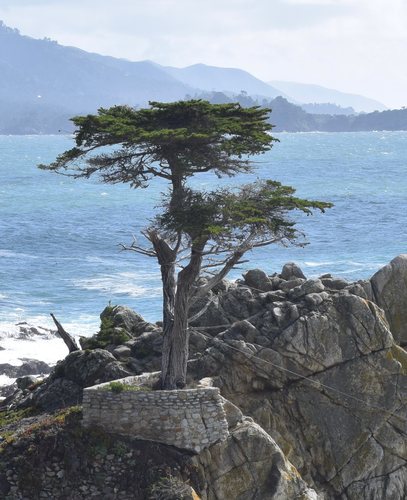
Monterey Cypress
Hesperocyparis macrocarpa
The Monterey Cypress is the gnarled, wind-swept sentinel of the Pacific coast, known for its sculptural beauty and lemony fragrance. A sanctuary for backyard wildlife, this iconic evergreen brings a sense of ancient permanence to any landscape.
Quick Identification
Size
Height: 20-30 meters (65-100 feet); Trunk diameter: up to 2.5 meters (8 feet)
Colors
Bright lime-green foliage in youth, maturing to a deep emerald; bark is grayish-brown and deeply furrowed
Key Features
- Distinctive wind-sculpted, flat-topped crown on mature trees
- Scale-like leaves that release a lemon scent when crushed
- Spherical, woody seed cones 1-1.5 inches in diameter
- Deeply textured, fibrous bark that becomes silver-gray with age
When You’ll See Them
Behavior
The Monterey Cypress is a master of adaptation, famous for its ability to survive the harsh, salt-laden winds of the California coast. While young trees grow in a symmetrical, conical shape, older specimens develop the iconic, gnarled, and wide-spreading limbs that have made them a favorite subject for photographers and artists. They are relatively fast-growing in garden settings but are incredibly long-lived, with some wild individuals reaching over 250 years of age.
In a backyard ecosystem, these trees act as a 'foundation species.' Their dense evergreen canopy provides a permanent windbreak and creates a unique microclimate beneath their branches. They are social trees in the sense that they often grow in groves to protect one another from storms, and they provide critical year-round cover for a variety of birds and small mammals that seek refuge from the elements and predators.
EverydayEarth exclusive
Camera Tips
To capture the true essence of a Monterey Cypress with your trail camera, you should focus on two different perspectives: the structural beauty of the tree itself and the wildlife that calls it home. For structural shots, place your camera at a distance and use a wide-angle setting to capture the entire silhouette against the sky, especially during the 'golden hour' just before sunset when the textured bark is highlighted. If your camera has a time-lapse mode, set it to take one photo every hour during the day for several months to watch how the tree's heavy limbs move and sway during seasonal storms.
When targeting the wildlife that uses the tree, position your camera 10-15 feet up in the canopy if possible. This is the 'highway' for squirrels and nesting birds like Scrub Jays and Cooper's Hawks. Use a mounting strap that doesn't damage the bark and aim the lens toward a sturdy horizontal branch. These branches often serve as landing pads for large birds. Because the foliage is so dense, you may need to adjust your exposure settings to account for the deep shadows within the tree; if your camera allows, increase the ISO or exposure compensation slightly to ensure you don't just see a black silhouette of an animal.
For ground-level activity, place your camera near the base of the trunk where the roots flare out. These crevices are prime real estate for lizards, salamanders, and small rodents. If you are in an area with salt spray, be sure to clean your camera lens weekly with a damp microfiber cloth, as salt buildup will quickly ruin your image clarity. During the autumn months, set your camera to high-speed video to catch squirrels and birds as they work to pry open the woody cones to get at the seeds inside.
Similar Species
Species that look similar or are commonly confused with Monterey Cypress.
Frequently Asked Questions
Record Monterey Cypress at your habitat
Connect a camera to start building your own species record — AI identifies every visitor automatically.