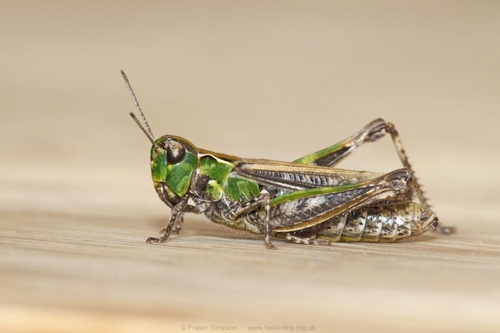
Mottled Grasshopper
Myrmeleotettix maculatus
A miniature marvel of camouflage, the Mottled Grasshopper is the hidden gem of dry, sunny gardens. Look closely for its unique clubbed antennae and listen for its rhythmic summer song.
Quick Identification
Size
11-16 mm (0.43-0.63 inches); males are typically smaller and slimmer than females.
Colors
Extremely variable; mottled patterns of brown, grey, green, and occasionally reddish-purple or black. Males often have an orange or red tint at the tip of the abdomen.
Key Features
- Distinctively clubbed antennae, especially prominent in males
- Pronotum (neck plate) with side-keels that are sharply angled inwards
- Small, stocky build with complex mottled camouflage
- Wings that usually reach or slightly exceed the end of the abdomen
When You’ll See Them
Behavior
The Mottled Grasshopper is a quintessential sun-lover, spending the vast majority of its active hours basking on warm, exposed surfaces. Unlike many other grasshoppers that prefer lush, tall meadows, this species seeks out 'micro-deserts'—patches of bare earth, sand, or stone where it can soak up the sun's heat. It is a master of camouflage, with its blotchy coloration allowing it to vanish against a backdrop of lichen-covered rocks or dry soil the moment it stops moving.
Socially, the species is defined by the male's courtship rituals. To attract a mate, the male produces a rhythmic song consisting of a series of short, ticking chirps that gradually increase in volume and speed. They are wary creatures with excellent 360-degree vision; at the first sign of a looming shadow or vibration, they use their powerful hind legs to launch into a long, low leap, often landing in a spot that makes them nearly impossible to relocate.
EverydayEarth exclusive
Camera Tips
Capturing the Mottled Grasshopper on an AI-powered camera requires a specific strategy because of their small size and ground-dwelling nature. Standard trail camera placements designed for mammals will likely miss them entirely. For the best results, use a camera with a dedicated macro lens or a close-focusing distance of 6–12 inches. Position the camera just 2–3 inches off the ground, using a mini-tripod or a beanbag for stability. Angle the lens slightly upward to catch the profile of the grasshopper against the sky or distant vegetation, which helps the AI distinguish its shape from the ground.
Since you can't easily lure insects with food like you can with birds, you must lure them with heat. Identify a 'basking spot'—a flat, dark stone or a patch of bare, sandy soil that receives direct sunlight for several hours a day. If your garden is too lush, you can create a 'photo stage' by clearing a small 12-inch circle of grass to reveal the soil. The Mottled Grasshopper will naturally gravitate to this warm clearing to regulate its body temperature, providing you with a consistent focal point for your camera.
Because these insects move in quick, explosive bursts, camera settings are crucial. Use a high-speed trigger or a time-lapse mode set to take a photo every 60 seconds during the peak heat of the day (11 AM to 3 PM). This 'brute force' approach ensures you catch them while they are stationary and basking. If your camera allows for sensitivity adjustments, set the PIR sensor to 'High,' but be aware that wind-blown grass may cause false triggers. Clear any tall blades of grass immediately in front of the lens to prevent the camera from focusing on the background instead of your tiny subject.
Similar Species
Species that look similar or are commonly confused with Mottled Grasshopper.
Frequently Asked Questions
Record Mottled Grasshopper at your habitat
Connect a camera to start building your own species record — AI identifies every visitor automatically.