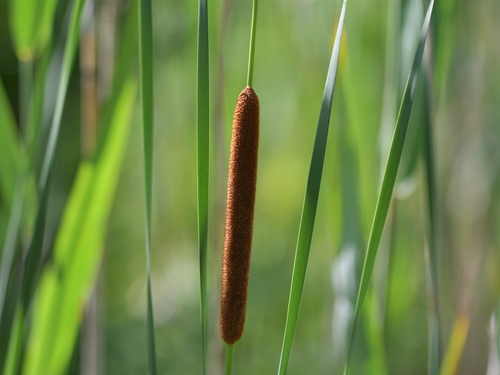
narrow-leaved cattail
Typha angustifolia
A slender sentinel of the marsh, the narrow-leaved cattail offers elegant structure and vital sanctuary for backyard wetland visitors.
Quick Identification
Size
Height of 1.5 to 3 meters (5 to 10 feet); leaves 4 to 12 millimeters (0.15 to 0.47 inches) wide
Colors
Slender green to bluish-green leaves with dark chocolate-brown cylindrical flower spikes
Key Features
- Narrow leaves usually less than 12mm wide
- Distinct 1-8 cm gap of bare stem between upper male and lower female flower spikes
- Tall, slender reed-like structure
- Dense, velvety brown seed heads
When You’ll See Them
Geographic range
Where Does the narrow-leaved cattail Live?
Native across a massive expanse of Eurasia and parts of North Africa, the narrow-leaved cattail is a cosmopolitan specialist of the water's edge. In North America, its status as a native is a subject of botanical debate, but it currently thrives throughout much of the United States and Canada, particularly in the East and Midwest. It is a highly adaptable species that has expanded its footprint by following human-made waterways and disturbed wetlands across temperate zones globally.
Basemap © OpenStreetMap contributors
Behavior
During the late spring and summer, the plant focuses its energy on reproduction. It is wind-pollinated, releasing clouds of yellow pollen from the upper spike to the lower female spike. Once fertilized, the female spike hardens into the iconic brown 'cattail.' In late autumn and winter, these spikes undergo a dramatic transformation, bursting open to release millions of tiny, tufted seeds that catch the breeze like miniature parachutes, allowing the plant to spread to distant ponds and ditches.
EverydayEarth exclusive
Camera Tips
If you are looking to capture the wildlife that eats or uses the plant, place your camera near the base of the stalks at the water's edge. Muskrats are frequently seen harvesting these stems for food and lodge construction. Because cattails grow in wet, humid environments, check your lens regularly for condensation or use a small rain shield to prevent 'foggy' shots. If your camera has a time-lapse mode, this is a fantastic way to document the plant's growth over a season or the slow explosion of the seed heads in the wind.
Avoid placing cameras in the thickest part of the stand where the wind-blown leaves might cause thousands of 'false triggers.' Instead, aim for the perimeter of a cattail patch where there is a clear line of sight. For AI-powered cameras, a clear background helps the software distinguish the narrow leaves of Typha angustifolia from other marsh grasses. In winter, keep the camera active; the dried, tan stalks provide a beautiful high-contrast background for capturing foraging winter birds or mammals traveling across the ice.
Similar Species
Species that look similar or are commonly confused with narrow-leaved cattail.
Frequently Asked Questions
Record narrow-leaved cattail at your habitat
Connect a camera to start building your own species record — AI identifies every visitor automatically.