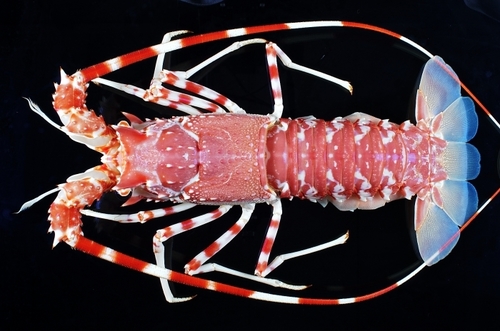
Natal Spiny Lobster
Palinurus delagoae
A vibrant red gem of the deep, the Natal Spiny Lobster thrives in the dark, high-pressure world of the Western Indian Ocean's continental shelf.
Quick Identification
Size
Body length 30-40 cm (12-16 inches); weight typically ranges from 0.8 to 1.5 kg (1.8-3.3 lbs)
Colors
Deep reddish-orange to pinkish-brown carapace; abdominal segments feature prominent white or pale cream spots on the sides; legs are reddish with lighter banding.
Key Features
- Two long, rigid, spiny antennae for defense
- Broad, spiny carapace without large front claws (pincers)
- Distinctive white spots along the lateral edges of the tail
- Four pairs of walking legs with a reddish hue.
When You’ll See Them
Geographic range
Where Does the Natal Spiny Lobster Live?
Native to the Western Indian Ocean, the Natal Spiny Lobster is found along the southeastern coast of Africa. Its core range extends from the Bazaruto Islands in Mozambique southward to the waters off Durban, South Africa, and also occurs on the submerged banks around Madagascar. This species is a deep-water specialist, rarely venturing into the shallow coastal waters frequented by recreational divers.
Basemap © OpenStreetMap contributors
Behavior
The Natal Spiny Lobster is a gregarious deep-water crustacean that prefers the social safety of numbers. Unlike some of its shallow-water relatives that are highly territorial, these lobsters are often found in large groups on the seafloor. They spend much of their time scavenging across the sandy and muddy substrates of the continental shelf, using their sensitive antennae to detect chemical signals from potential food sources or predators in the darkness.
These lobsters exhibit a fascinating depth-related migration pattern. They generally move into deeper waters as they age and grow, with the largest individuals often found at the furthest reaches of their depth range. They are primarily nocturnal, emerging from rocky crevices or depressions in the seabed at night to forage. While they lack the massive claws of Atlantic lobsters, they defend themselves using their thick, spiny carapaces and by rapidly snapping their tails to propel themselves backward away from danger.
EverydayEarth exclusive
Camera Tips
Capturing the Natal Spiny Lobster requires specialized equipment, as this species lives in the high-pressure, dark environment of the deep continental shelf. For DIY explorers or coastal researchers, a benthic 'drop camera' system is essential. These rigs should be weighted to sit firmly on the sandy seafloor and equipped with high-intensity underwater LEDs. Because red light is absorbed quickly by water, using artificial white light is necessary to reveal the lobster's vibrant orange and red coloration.
To successfully lure these crustaceans into the camera's field of view, use a perforated bait canister filled with oily fish like sardines or mackerel. The scent will travel with the deep-ocean currents, drawing lobsters from their rocky hiding spots toward your lens. Positioning the camera at a slight downward angle (about 30 degrees) towards the bait will capture the best footage of their scavenging behavior and social interactions.
When setting your AI-powered camera's trigger sensitivity, be mindful of marine 'snow' and shifting currents. If your software allows, set the AI to specifically recognize high-contrast movement against the seabed. Since these lobsters are most active in the dead of night, ensure your battery housing is rated for the cold, high-pressure environment of the 200-meter depth zone. Spring and summer months often see higher activity levels as they move along the shelf for breeding cycles.
Similar Species
Species that look similar or are commonly confused with Natal Spiny Lobster.
Frequently Asked Questions
Record Natal Spiny Lobster at your habitat
Connect a camera to start building your own species record — AI identifies every visitor automatically.