Neem
Azadirachta indica
Known as the 'Village Pharmacy,' the Neem tree is a powerhouse of the tropical garden. With its insect-repelling leaves and sweet-scented flowers, it provides a lush, cooling sanctuary for both humans and wildlife.
Quick Identification
Size
Typically reaches 15–20 metres (50–65 feet) in height, with a broad, rounded crown spreading up to 20 metres (66 feet) wide.
Colors
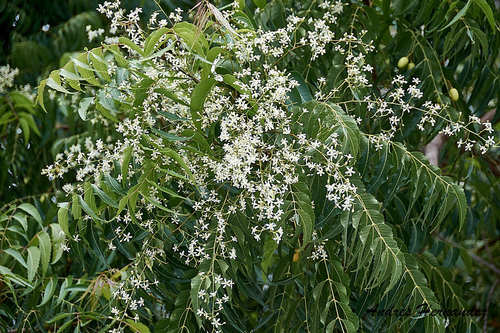
Greyish-brown bark with deep longitudinal furrows; bright green foliage; small white or cream-colored flowers; and yellowish-green drupe fruits.
Key Features
- Serrated, sickle-shaped leaflets in pinnate arrangements
- Small, honey-scented white flowers in drooping clusters
- Smooth, olive-like green to yellow fruits
- Deeply fissured grey-brown bark on mature trunks
When You’ll See Them
Geographic range
Where Does the Neem Live?
The Neem tree is originally native to the Indian subcontinent, including India, Pakistan, Sri Lanka, and Bangladesh, as well as parts of Southeast Asia like Myanmar. Due to its incredible utility and hardiness, it has been introduced and naturalized across much of the African continent, the Caribbean, and parts of Australia and Central and South America. It is a common sight in almost any frost-free tropical environment, where it is often planted for reforestation and as a windbreak. In its native range, it thrives in areas with high temperatures and low rainfall, showcasing an impressive ability to adapt to changing climates.
Basemap © OpenStreetMap contributors
Behavior
In suburban and rural environments, Neem is often called the 'Village Pharmacy' because of its extensive use in traditional medicine and organic farming. It provides a dense, cooling shade that can lower local temperatures significantly. While it is a solitary grower, its wide canopy often becomes a communal hub for local bird life and small mammals who seek shelter in its thick foliage and feed on its seasonal fruit.
EverydayEarth exclusive
Camera Tips
If you are looking to capture wildlife interaction, point your camera toward the fruiting clusters during the summer months. Neem fruits are a magnet for frugivorous birds like bulbuls and barbets, as well as fruit bats at night. Using a motion-trigger setting with a short delay will ensure you catch these quick-moving visitors. Since the tree provides dense shade, you may need to adjust your camera's exposure settings or ISO to ensure that images taken deep within the canopy aren't too dark or grainy.
Time-lapse photography is particularly rewarding with Neem. Because it grows quickly and responds visibly to the seasons, setting your camera to take one or two photos a day can create a stunning visual record of its flowering and fruiting cycles. Ensure your camera lens is cleaned regularly, especially in dry climates where the fine dust that Neem thrives in can easily coat the glass and blur your shots. For AI-powered cameras, the distinct serrated leaf shape is a great training subject, so ensure the foliage is well-lit for the best identification results.
Similar Species
Species that look similar or are commonly confused with Neem.
Frequently Asked Questions
Record Neem at your habitat
Connect a camera to start building your own species record — AI identifies every visitor automatically.