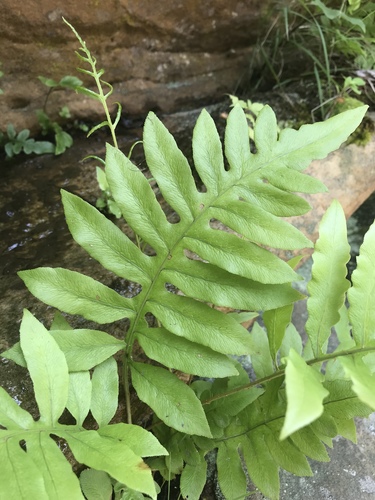
netted chain fern
Woodwardia areolata
Transform your wet garden corners into an ancient oasis with the netted chain fern. With its distinctive vein patterns and striking 'chain-link' spores, it’s a master of texture and a sanctuary for backyard amphibians.
Quick Identification
Size
Sterile fronds reach 30-60 cm (12-24 inches) in height; fertile fronds are typically taller and narrower.
Colors
Sterile fronds are a bright, waxy green; fertile fronds turn dark cinnamon-brown to blackish; stalks are often reddish-brown.
Key Features
- Netted or 'chain-like' vein pattern visible on the leaf underside
- Deeply lobed sterile fronds with alternate (not opposite) leaflets
- Striking dimorphism with whip-like brown fertile fronds
- Glossy, dark-colored stems that persist into winter
When You’ll See Them
Behavior
In the garden ecosystem, this fern acts as a vital structural component. Its dense, low-growing habit creates a cool, humid microclimate at the soil level, which is essential for the survival of small woodland creatures. While the plant itself isn't 'social,' it is highly communal, often found growing alongside sphagnum moss or highbush blueberry bushes in acidic, wet environments.
EverydayEarth exclusive
Camera Tips
Capturing the netted chain fern requires a different strategy than mobile wildlife. To showcase its most unique feature—the 'chain' vein pattern—position your camera at a low angle (about 6 inches off the ground) and aim it upward toward the underside of the sterile fronds. Using a camera with a macro or close-up setting will allow you to capture the intricate, net-like architecture of the veins that gives the species its name. This is best done on a bright but overcast day to avoid harsh shadows and glare on the waxy leaf surface.
If you are using a motion-activated trail camera, be aware that ferns are notorious for creating 'false triggers' on windy days. To avoid a memory card full of waving leaves, place your camera on a sturdy stake or tree trunk and clear any tall grass immediately in front of the lens. However, you can use this movement to your advantage: set your camera to time-lapse mode during the spring (April and May) to capture the dramatic 'unfurling' of the fiddleheads. Set the interval to one photo every 2-4 hours to see the fern grow from a fuzzy nub to a full frond over the course of a week.
Don't just focus on the green leaves; the dark, narrow fertile fronds that emerge in late summer are excellent subjects. These stalks are much stiffer and less prone to wind-blur. They also attract specific visitors. By focusing your camera on a cluster of these fertile stalks, you can often catch images of small spiders weaving webs between them or tree frogs using the sturdy stems as a hunting perch. For the best color depth, set your white balance to 'Cloudy' to bring out the rich cinnamon and bronze tones of the fertile fronds.
Finally, consider the seasonal transition. While the green fronds may wither after the first frost, the dark fertile stalks often remain standing through the winter. These provide excellent contrast against the snow. If you have an AI-powered camera that identifies birds, try placing a feeder nearby; the stiff stalks of the netted chain fern are popular landing spots for chickadees and wrens, providing you with a beautiful, naturalistic foreground for your bird photography.
Similar Species
Species that look similar or are commonly confused with netted chain fern.
Frequently Asked Questions
Record netted chain fern at your habitat
Connect a camera to start building your own species record — AI identifies every visitor automatically.