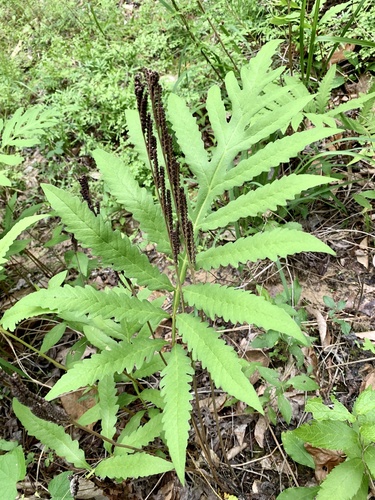
sensitive fern
Onoclea sensibilis
A prehistoric survivor in your own backyard, the sensitive fern tells the story of the seasons with its frost-sensitive leaves and unique, bead-like spore cases. It’s the perfect subject for photographers looking to capture the subtle transitions of the natural world.
Quick Identification
Size
Sterile fronds typically reach 30–100 cm (12–40 in) in height; fertile spikes are shorter, usually 20–50 cm (8–20 in).
Colors
Sterile fronds are a bright, light-to-medium green with a slightly leathery texture; fertile fronds turn a distinct dark chocolate brown to charcoal black as they mature.
Key Features
- Deeply lobed, wavy-edged sterile fronds with a 'net-like' vein pattern
- Unique fertile fronds that look like clusters of small wooden beads
- Sensitivity to frost causing foliage to blacken and wither almost instantly in autumn
- Thick, creeping rhizomes that allow it to form dense colonies in moist soil
When You’ll See Them
Behavior
The sensitive fern is a resilient perennial that gets its name from its extreme susceptibility to the first touch of frost. While other plants might linger into late autumn, this fern’s sterile fronds collapse and wither at the first sign of freezing temperatures, acting as a natural thermometer for backyard observers. It is a colonial grower, spreading via underground rhizomes to create lush, prehistoric-looking patches in damp areas.
One of its most fascinating behaviors is its production of two distinct types of fronds, a trait known as dimorphism. The leafy green fronds are for photosynthesis, while the stiff, bead-like stalks (fertile fronds) carry the spores. These fertile stalks are incredibly tough; they stay upright throughout the winter long after the green foliage has vanished, often poking through the snow to release spores in the early spring winds.
EverydayEarth exclusive
Camera Tips
Capturing the sensitive fern on your backyard camera requires a different strategy than tracking moving wildlife. To get the most dramatic shots, set your camera on a low-profile ground stake or a small tripod only 12 to 18 inches off the ground. Aiming the lens slightly upward through the fronds creates a 'forest floor' perspective that makes the plant look architectural and grand. If your camera has a time-lapse mode, target the month of May to capture the 'fiddleheads' uncurling—this is one of the most spectacular growth sequences in the plant kingdom.
Lighting is your best friend when photographing this species. Because the fronds are relatively translucent, positioning your camera so the sun is behind the fern (backlighting) will highlight the intricate, net-like vein patterns that distinguish it from similar species. This is best achieved during the golden hours—shortly after sunrise or before sunset. If you are using a motion-activated camera, be aware that wind can trigger false captures; however, these 'wind-triggers' often result in beautiful, blurred artistic shots of the fern in motion.
Don't pack your camera away when the green leaves die back in the fall. The 'bead-like' fertile fronds provide excellent structural interest for winter photography. Place your camera near these stalks after a light snowfall to capture the contrast between the dark brown 'beads' and the white snow. Because these stalks are rigid, they serve as perfect perches for wintering songbirds, providing a great opportunity to photograph birds like chickadees or titmice in a natural, textured setting.
Similar Species
Species that look similar or are commonly confused with sensitive fern.
Frequently Asked Questions
Record sensitive fern at your habitat
Connect a camera to start building your own species record — AI identifies every visitor automatically.