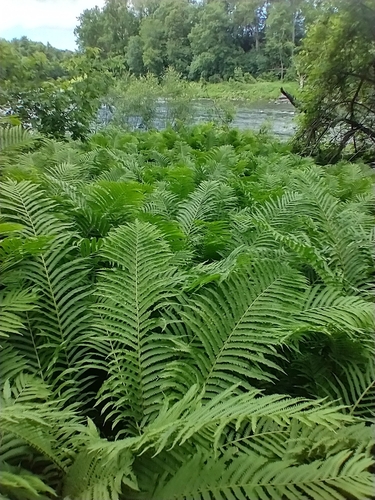
ostrich fern
Matteuccia struthiopteris
The ostrich fern is a living relic of the prehistoric world, unfurling its giant, feathery plumes to create a lush green sanctuary in any shaded backyard. Known for its edible spring fiddleheads and striking architectural shape, it is a centerpiece of the woodland floor.
Quick Identification
Size
Fronds typically reach 3 to 6 feet (0.9 to 1.8 meters) in height, forming a vase-like clump roughly 2 to 3 feet (0.6 to 0.9 meters) wide.
Colors
Bright, vivid lime-green sterile fronds; fertile fronds are shorter and turn a dark, woody cinnamon-brown as they mature.
Key Features
- Distinctive 'shuttlecock' or vase-shaped growth habit
- Deeply grooved, smooth green stipe (stem) resembling a celery stalk
- Rigid, brown fertile fronds that emerge from the center and persist through winter
- Large, feathery sterile fronds that taper at both the base and the tip
When You’ll See Them
Behavior
The ostrich fern is a perennial plant known for its dramatic architectural presence. It grows in a circular clump, with the large sterile fronds arching outward to create a shape reminiscent of a shuttlecock or a plume of ostrich feathers. Unlike many other ferns that spread their spores on the underside of their leaves, this species produces specialized fertile fronds. These emerge in mid-summer as green spikes but quickly harden into a stiff, dark brown structure that protects the spores throughout the winter months.
In the spring, the ostrich fern is famous for its 'fiddleheads'—tightly coiled young fronds that emerge from the soil covered in a thin, papery brown scale. As the season progresses, the plant spreads via underground runners called rhizomes, eventually forming dense colonies. While it doesn't 'interact' with humans in a social sense, it is a favorite for foragers who harvest the fiddleheads in early spring and for gardeners looking to create a prehistoric, lush atmosphere in shaded areas.
EverydayEarth exclusive
Camera Tips
To capture the true majesty of the ostrich fern, set your camera at a low angle, roughly 1 to 2 feet off the ground. This perspective emphasizes the 'vase' shape and makes the fronds look like an emerald canopy. If you are using a camera with time-lapse capabilities, the spring emergence of fiddleheads is one of the most rewarding botanical events to film. Frame the crown of the plant in late April and set your camera to take a photo every 2-4 hours; you will be amazed at how quickly the fronds unfurl into their full height.
Lighting is your biggest challenge in the shady habitats where these ferns thrive. High-contrast 'dappled' sunlight can wash out the delicate textures of the leaves. For the best results, set your camera to trigger during the 'golden hours' of early morning or late afternoon when the light is softer. If your camera allows for exposure adjustment, slightly underexposing the shot can help preserve the deep, rich greens of the foliage without blowing out the highlights.
Don't pack your camera away in the winter. The ostrich fern is one of the few plants that provides a 'winter interest' silhouette. The dark brown fertile fronds remain standing even in deep snow. Position your camera to face the center of the fern clump against a backdrop of fresh snow for a high-contrast, minimalist shot. This is also a great time to see if any small birds or mammals are using the stiff fertile fronds as cover or as a perch.
Because the ostrich fern grows in damp areas, ensure your camera housing is well-sealed against humidity. If you are positioning the camera near a riverbank to capture the ferns in their natural habitat, use a sturdy tripod or a screw-in tree mount to prevent the camera from shifting in soft, muddy soil. If you want to capture the fine details of the spores, use a macro lens or a close-up setting on the fertile fronds in late summer.
Similar Species
Species that look similar or are commonly confused with ostrich fern.
Cinnamon Fern
The cinnamon fern has woolly hairs on its stems and its fertile fronds turn a bright cinnamon-orange rather than dark brown.
Interrupted Fern
It is named for the 'interruption' in the middle of the green fronds where the spores are located, unlike the ostrich fern's separate fertile stalks.
Lady Fern
Lady ferns have a much more delicate, lacy appearance and lack the distinct vase-shaped clump and rigid brown winter fronds.
Frequently Asked Questions
Record ostrich fern at your habitat
Connect a camera to start building your own species record — AI identifies every visitor automatically.