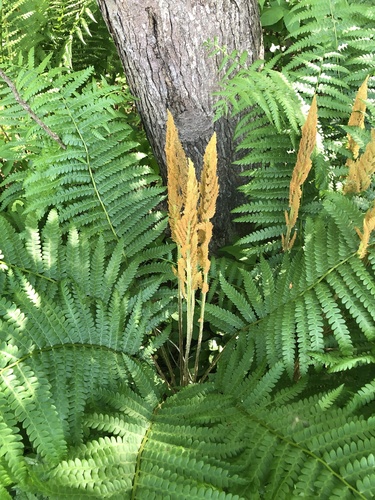
cinnamon fern
Osmundastrum cinnamomeum
A living fossil from the Triassic period, the cinnamon fern is a prehistoric beauty known for its vibrant green fronds and striking copper-colored spore spikes. It is the perfect anchor for a backyard rain garden or a shaded woodland corner.
Quick Identification
Size
Height ranges from 2 to 5 feet (60–150 cm); fronds can be up to 1 foot (30 cm) wide.
Colors
Sterile fronds are a vibrant, deep green; the central fertile fronds turn a distinct cinnamon-brown as they mature.
Key Features
- Erect, cinnamon-colored fertile fronds in the center of the plant
- Large, arching sterile fronds forming a vase-like clump
- Distinct tufts of orange-brown 'wool' at the base of the leaflets (pinnae)
- Woolly, silver-green fiddleheads (crosiers) appearing in early spring
When You’ll See Them
Geographic range
Where Does the cinnamon fern Live?
Native primarily to the Americas and East Asia, the cinnamon fern is a widespread species that flourishes in moist, temperate environments. In the Western Hemisphere, it can be found from the boreal forests of eastern Canada down through the eastern United States to Florida and the Gulf Coast, extending further south into parts of Central and South America. Across the Pacific, it occupies similar ecological niches in China, Japan, Korea, and parts of Siberia, making it a truly cosmopolitan fern of the northern and southern temperate zones.
Basemap © OpenStreetMap contributors
Behavior
Unlike mobile wildlife, the cinnamon fern's 'behavior' is defined by its dramatic seasonal growth cycle. In early spring, it emerges from the soil as fuzzy, silver-white fiddleheads covered in a thick coat of woolly hair. These quickly unfurl into two distinct types of fronds: the outer sterile green leaves and the inner fertile spikes that carry the spores.
As the season progresses, the inner spikes transition from a pale green to a rich, rusted-cinnamon color, which gives the species its name. While it remains stationary, it acts as a foundational member of its ecosystem, providing critical structural cover for amphibians like wood frogs and nesting sites for ground-dwelling birds. It is highly resistant to deer and most pests, making it a reliable and long-lived resident of shady, wet gardens.
EverydayEarth exclusive
Camera Tips
To capture the stunning architectural growth of cinnamon ferns, set your camera on a low-angle tripod or ground mount. The most dramatic footage occurs during the 'fiddlehead' stage in early spring. Because these plants grow relatively slowly but change noticeably over a week, use a time-lapse setting, taking one photo every hour to capture the rhythmic unfurling of the fronds.
Position your camera to face the center of the clump to catch the emergence of the fertile 'cinnamon' spikes. These spikes are best photographed in the soft, diffused light of early morning or late afternoon to avoid harsh shadows that can obscure the delicate woolly texture of the stems. If your camera has a macro lens or a close-focus feature, try to get within two feet of the frond base to highlight the distinctive orange-brown woolly tufts where the leaflets meet the main stem.
Since cinnamon ferns thrive in wet areas, ensure your camera housing is moisture-resistant. These ferns are often 'high-traffic' areas for backyard wildlife like toads and salamanders. Aim your lens slightly downward from the fern toward the base of the clump; you may catch small amphibians using the dense fronds as a canopy for protection during the day or hunting grounds at night.
Similar Species
Species that look similar or are commonly confused with cinnamon fern.
Frequently Asked Questions
Record cinnamon fern at your habitat
Connect a camera to start building your own species record — AI identifies every visitor automatically.