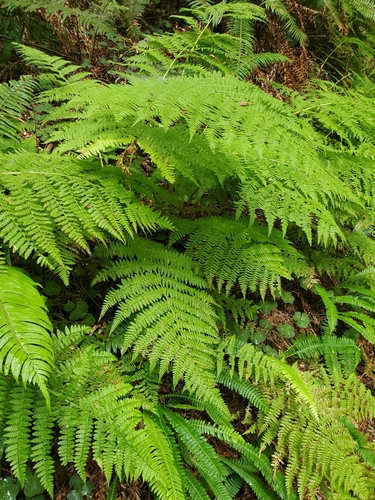
lady fern
Athyrium filix-femina
Elegant, feathery, and remarkably resilient, the Lady Fern is the 'grand dame' of the shady garden. Its delicate fronds provide a lush, prehistoric backdrop for your backyard wildlife photos.
Quick Identification
Size
Fronds typically grow 30–90 cm (12–35 inches) long and 10–25 cm (4–10 inches) wide
Colors
Bright light-green to lime-green fronds; stems (stipes) range from straw-colored to a distinct reddish-purple or brown
Key Features
- Twice-pinnate or thrice-pinnate lacy fronds
- Crescent or J-shaped spore clusters (sori) on frond undersides
- Clump-forming growth habit with a circular crown
- Deciduous fronds that die back completely in winter
When You’ll See Them
Behavior
The lady fern is a hardy, deciduous perennial known for its graceful, arching growth habit. Unlike many other fern species that spread aggressively via runners, the lady fern tends to stay in neat, circular clumps, making it a favorite for structured backyard landscapes. In the early spring, it produces tightly coiled 'fiddleheads' that slowly unfurl into the iconic feathery fronds. As the season progresses, the plant provides essential low-level cover for ground-dwelling wildlife.
While the plant itself is stationary, it reacts dynamically to its environment. During periods of drought, the fronds may brown or curl to conserve moisture. In the ecosystem, lady ferns act as a micro-habitat; their dense, overlapping leaves create a humid, cool environment perfect for amphibians and beneficial insects. They are generally resilient to heavy rain and wind, though their delicate appearance might suggest otherwise.
EverydayEarth exclusive
Camera Tips
When setting up a camera to capture the beauty of the lady fern, height and stability are key. Position your camera on a low tripod or a ground mount, roughly 12 to 18 inches off the forest floor. This 'worm's eye view' emphasizes the architectural structure of the fronds and allows you to capture small visitors, like toads or beetles, that seek shelter beneath the canopy. Aim for a 45-degree upward angle to catch the sunlight filtering through the translucent green leaflets.
Because the lady fern is a plant, it is the perfect subject for a long-term time-lapse project. Set your camera to take one photo every hour starting in late March or early April. When stitched together, you will see the dramatic 'awakening' of the fiddleheads as they rise from the soil and unfurl. This is one of the most visually stunning biological processes you can capture in a backyard setting. Ensure your camera is secured to a permanent post to prevent frame-shift over the weeks of recording.
For those using motion-activated cameras, be aware that the lady fern's light, feathery fronds are highly sensitive to wind. On a breezy day, a lady fern can trigger hundreds of 'false' videos. To avoid filling your SD card with footage of waving leaves, set your camera's PIR (Passive Infrared) sensitivity to 'Medium' or 'Low.' Alternatively, use the fern as a 'frame'—place your camera so the fern occupies the side of the shot, creating a natural, soft-focus border for any mammals or birds that walk into the center of the clearing.
If you are looking to capture wildlife interaction, lady ferns are excellent 'lure' spots for amphibians. During a light rain or immediately after a summer storm, position your camera with a macro lens or a close-focus setting near the base of the fern. Frogs and salamanders often congregate in the moist litter at the base of the plant. No artificial bait is needed here; the natural microclimate of the fern is the primary attractant.
Similar Species
Species that look similar or are commonly confused with lady fern.
Male Fern
The male fern has more robust, leathery fronds and circular spore clusters, whereas the lady fern is more delicate and lacy with J-shaped sori.
Ostrich Fern
Ostrich ferns grow much larger (up to 5 feet) and have fronds that resemble ostrich plumes, emerging from a more distinct vertical 'vase' shape.
Frequently Asked Questions
Record lady fern at your habitat
Connect a camera to start building your own species record — AI identifies every visitor automatically.