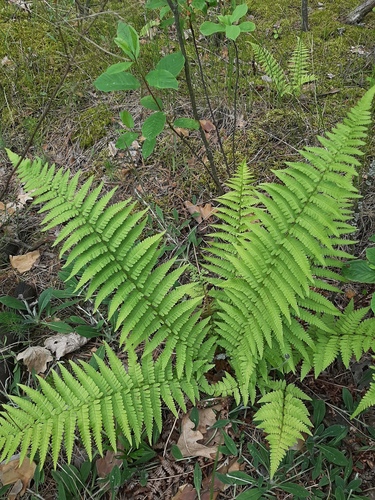
male fern
Dryopteris filix-mas
The male fern is a prehistoric masterpiece of the forest floor, known for its iconic 'shuttlecock' shape and shaggy, golden-scaled stems. It provides essential architectural beauty and wildlife cover to any shady backyard sanctuary.
Quick Identification
Size
Fronds typically reach 2 to 5 feet (60–150 cm) in length; clump diameter ranges from 2 to 4 feet (60–120 cm).
Colors
Deep forest-green fronds with pale green undersides; the base of the stem (stipe) is covered in distinctive golden-brown or rusty scales.
Key Features
- Robust 'shuttlecock' or crown-like growth habit
- Stems heavily clothed in shaggy golden-brown scales
- Double-rowed, kidney-shaped spore cases (sori) on frond undersides
- Semi-evergreen fronds that taper at both ends
When You’ll See Them
Behavior
The male fern is a hardy, non-flowering perennial that serves as a cornerstone of the woodland understory. Unlike animals, its 'behavior' is defined by its growth cycle: in early spring, it produces tightly coiled 'fiddleheads' or crosiers that slowly unfurl into large, feathery fronds. It grows in a distinctive circular clump, creating a vase-like shape that provides excellent low-level cover for small mammals and amphibians.
While it is largely stationary, the male fern is a master of reproduction via spores rather than seeds. During the late summer, the undersides of the fronds develop dark spots called sori, which eventually release millions of microscopic spores into the wind. In the garden or wild, it is a sturdy, long-lived species that can survive for decades, often staying green well into the winter months in milder climates.
EverydayEarth exclusive
Camera Tips
Capturing the male fern on camera is a rewarding exercise in time-lapse and macro photography. Because ferns don't move (unless the wind blows), they are the perfect subject for testing your camera's sharpness and color depth. For the most dramatic footage, set up a trail camera in 'Time Lapse' mode near a cluster of emerging fiddleheads in late March or April. Set the interval to one photo every 2-4 hours to capture the mesmerizing 'unrolling' of the fronds over several days.
If you are using an AI-powered camera to spot wildlife, position the unit about 12-18 inches off the ground, angled toward the base of the fern. The dense fronds of the male fern are a favorite hiding spot for toads, hedgehogs, and ground-nesting birds. By using the fern as a natural 'backdrop,' you increase your chances of capturing shy critters that feel safe moving through the thick foliage. Avoid placing the camera in direct sunlight; ferns look best in the soft, diffused light of a 'cloudy' setting, which prevents the highlights from blowing out.
For those interested in the finer details, use a camera with a good macro or close-up focus capability. In late summer, flip a frond over and photograph the kidney-shaped sori. These provide incredible geometric patterns that change color from light green to a deep, rusty brown as they mature. If your camera has a 'motion trigger' sensitive enough for insects, you may even capture the various beetles and spiders that use the fern's scaled stems as a vertical highway.
Similar Species
Species that look similar or are commonly confused with male fern.
Frequently Asked Questions
Record male fern at your habitat
Connect a camera to start building your own species record — AI identifies every visitor automatically.