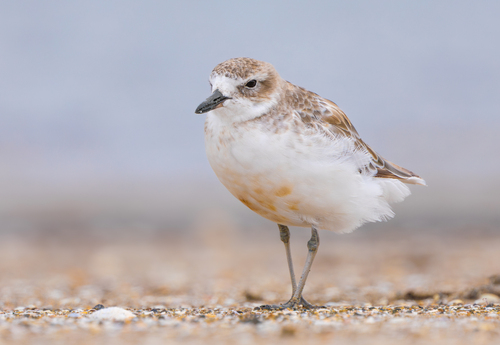
New Zealand Plover
Anarhynchus obscurus
A resilient icon of the New Zealand coastline, the New Zealand Plover is a master of camouflage and a devoted guardian of the dunes.
Quick Identification
Size
Length of approximately 25 cm (10 in); weight ranges from 130 to 170 g (4.6–6.0 oz)
Colors
Pale grey-brown upperparts and white underparts that flush to a deep rusty-red or orange during the breeding season. Males generally show more intense coloration than females.
Key Features
- Heavy black bill
- Large dark eyes with a subtle white 'eyebrow'
- Stocky, hunched posture
- Vibrant orange-red breast in breeding plumage
- Faint white wing bar visible in flight
When You’ll See Them
Behavior
The New Zealand Plover, or Tūturiwhatu, is a charismatic shorebird known for its bold personality and clever defensive tactics. While they are often seen standing perfectly still, blending into the shell-strewn sand, they are surprisingly active foragers. They are highly territorial during the breeding season, often engaging in 'parade' displays where they march along their boundary lines to ward off rivals. When humans or predators approach a nest, they are famous for their 'broken-wing' act—a convincing performance where they lure threats away from their eggs by pretending to be injured.
In coastal communities, these birds have become somewhat accustomed to human presence, though they remain vulnerable to disturbance. They are usually found in pairs or small family groups. Their social structure is stable, with pairs often returning to the same nesting site year after year. While generally quiet, they emit a sharp 'chip' or 'whistle' when alarmed, which is often the first sign a backyard camera owner will have that a plover is nearby.
EverydayEarth exclusive
Camera Tips
To capture the best footage of New Zealand Plovers, camera placement is everything. Since these birds are ground-dwellers that prefer wide-open spaces, mount your camera just 10–20 centimeters (4–8 inches) off the ground. If you live near a beach, look for 'scrapes'—small, shallow depressions in the sand or short grass which they use as nests. Aim your camera toward these areas from a respectful distance of at least 5 meters to avoid causing stress or abandonment. Using a wide-angle lens is ideal for capturing their rapid running movements and territorial displays.
Because coastal environments are high-glare, try to position your camera with the sun at its back to avoid silhouetting the bird. If your backyard has a flat, sandy patch or a very short-mown lawn near the dunes, you can encourage them to linger by providing a very shallow, ground-level birdbath with fresh water. They are cautious, so ensure the camera is well-camouflaged with local driftwood or beach stones, as shiny plastic casings can sometimes startle them.
Timing is crucial. While they are diurnal, they are most active during the hours surrounding low tide when more foraging ground is exposed. Set your camera to 'Burst Mode' or high-frame-rate video; these birds move in a 'run-and-stop' pattern that can be very fast. During the breeding months of September through January, you may be lucky enough to capture the fluffy, well-camouflaged chicks, which look like small pom-poms on stilts. Always ensure your camera setup does not provide a perch for predatory birds like hawks or black-backed gulls.
Similar Species
Species that look similar or are commonly confused with New Zealand Plover.
Frequently Asked Questions
Record New Zealand Plover at your habitat
Connect a camera to start building your own species record — AI identifies every visitor automatically.