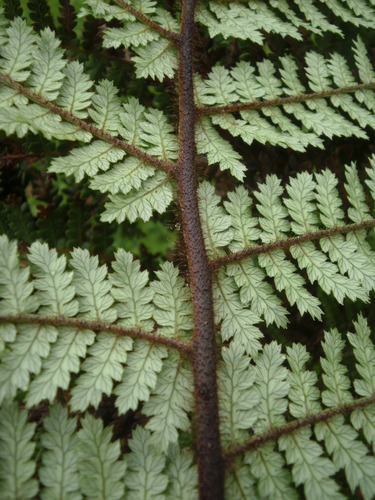
New Zealand tree fern
Dicksonia squarrosa
The Whekī is New Zealand’s most iconic and resilient tree fern, instantly recognizable by its slender black trunk and 'skirt' of fallen fronds. A true survivor, it turns any backyard into a lush, prehistoric-looking haven for local birds and insects.
Quick Identification
Size
Height up to 6–7 meters (20–23 ft); fronds 1.5–3 meters (5–10 ft) in length
Colors
Dark brown to black trunk; vibrant lime to deep green fronds; reddish-brown hairs at the base of fronds
Key Features
- Slender black trunk often covered in old frond bases
- Persistent 'skirt' of dead brown fronds hanging below the crown
- Rough, woody texture on the trunk (gives it the name 'rough tree fern')
- New fronds emerge as tightly coiled koru
When You’ll See Them
Behavior
The Whekī is a resilient pioneer species, often one of the first tree ferns to colonize disturbed land or forest edges. Unlike many other ferns, it is remarkably hardy and can even sprout new growth from its trunk if the main crown is damaged. It plays a vital role in the New Zealand ecosystem by providing a sturdy substrate for epiphytes—smaller plants and mosses that grow directly on its rough, moisture-retaining trunk.
In a backyard setting, the Whekī acts as a vertical high-rise for local biodiversity. Its dense crown of fronds offers excellent nesting sites for small birds, while the 'skirt' of dead fronds provides a humid microhabitat for a vast array of invertebrates, including beetles, spiders, and wētā. This makes the tree fern a central hub for foraging birds like the Pīwakawaka (Fantail).
EverydayEarth exclusive
Camera Tips
When using an AI-powered camera like EverydayEarth, the New Zealand tree fern should be treated as a 'stage' rather than just a subject. Position your camera about 2 to 3 meters (6–10 ft) away, aimed at the 'skirt' of dead fronds or the junction where the crown meets the trunk. This is a high-traffic zone for insects and the birds that hunt them. A slightly upward angle can capture the underside of the fronds, which is where many insects hide during the day.
For those interested in time-lapse photography, the Whekī is a fantastic subject during the spring months. If you notice a new 'koru' (unfurling frond) emerging from the center of the crown, set your camera to take a photo every 30 to 60 minutes. Over several days, you will capture the dramatic 'unrolling' motion that is iconic to New Zealand flora. Ensure your camera is securely mounted, as the weight of the fronds can catch the wind and cause motion-blur if the camera isn't stable.
Lighting is key for capturing the Whekī's dramatic textures. The black, fibrous trunk can absorb a lot of light, so try to position your camera so it benefits from dappled sunlight or side-lighting during the 'golden hour' (late afternoon). This will highlight the rough ridges of the trunk and the delicate, feathery patterns of the green fronds. If your camera has infrared night vision, you'll find the Whekī becomes a busy hub after dark, as wētā and other nocturnal invertebrates emerge from the dead fronds to feed.
Finally, consider the Whekī as a natural framing device. If you have a bird feeder or water bath, placing it near the fern allows you to capture wildlife in a natural-looking setting. The dark trunk provides a high-contrast background that makes the colors of visiting birds like the Tūī or Kererū pop in your photos and videos. Adjust your trigger sensitivity to 'medium' to avoid the camera being set off by fronds blowing in high winds.
Similar Species
Species that look similar or are commonly confused with New Zealand tree fern.
Frequently Asked Questions
Record New Zealand tree fern at your habitat
Connect a camera to start building your own species record — AI identifies every visitor automatically.