Ninepin Heath
Erica mammosa
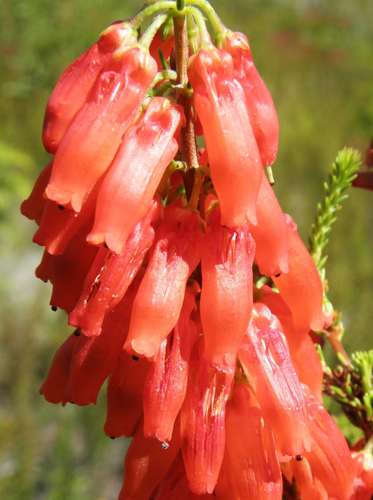
A stunning icon of the South African fynbos, the Ninepin Heath dazzles with its waxy, bowling-pin-shaped blooms and needle-like evergreen foliage.
Quick Identification
Size
Sturdy shrub reaching 0.5 to 1.5 metres (1.6 to 5 feet) in height and width.
Colors
Highly variable blooms ranging from deep cherry red and bright orange to soft pink, cream, and translucent lime green.
Key Features
- Distinctive pendulous flowers shaped like old-fashioned bowling pins (ninepins)
- Needle-like leaves arranged in dense whorls along the stems
- Long, tubular corollas measuring 20-30mm with a narrow, constricted opening.
When You’ll See Them
Geographic range
Where Does the Ninepin Heath Live?
The Ninepin Heath is a proud native of the African continent, found exclusively within the southwestern corner of South Africa. This species is a local icon of the Western Cape province, where it thrives in the unique Mediterranean climate of the Cape Floristic Region. While it is most concentrated on the Cape Peninsula and the surrounding coastal lowlands, it has been successfully introduced to botanical gardens and specialized landscapes in other temperate regions worldwide.
Basemap © OpenStreetMap contributors
Behavior
Ninepin Heath is a cornerstone species of the South African fynbos, known for its remarkably long flowering period. Unlike many plants that bloom briefly, this hardy shrub can produce its waxy, bell-like flowers for much of the year, though it peaks during the warmer summer months. It is an essential nectar source for long-billed sunbirds, which have co-evolved with the plant to access the deep nectar reservoirs at the base of the tubular flowers.
As a fire-adapted species, Erica mammosa plays a vital role in its ecosystem's lifecycle. While the adult plants are often killed by the periodic fires that sweep through the Cape region, their seeds are stimulated to germinate by the heat and smoke, ensuring a new generation rises from the ashes. In a garden or backyard setting, it acts as a structural anchor, providing year-round greenery and frequent bursts of color that attract a variety of local pollinators.
EverydayEarth exclusive
Camera Tips
Capturing the Ninepin Heath on a backyard or trail camera requires a focus on its relationship with wildlife. Since the plant itself is stationary, position your camera on a sturdy tripod or mount approximately 0.5 to 1 metre off the ground, aiming directly at a cluster of fresh, open blooms. Angle the lens slightly upward to capture the interior of the pendulous 'ninepin' flowers and to better frame the sunbirds that will hover or perch on the stems to feed.
For the best results, use a camera with a high-speed trigger or a dedicated 'macro' mode. Sunbirds move incredibly fast, so a shutter speed of at least 1/1000th of a second is recommended if your device allows for manual adjustments. Because this plant thrives in bright, Mediterranean light, midday shots can sometimes appear washed out; try to capture footage during the 'golden hours' of early morning or late afternoon when the waxy texture of the flowers catches the low sun and creates a beautiful glow.
If you are using an AI-powered camera to identify visitors, ensure there is a clear, unobstructed line of sight between the lens and the flower opening. Avoid placing the camera in areas where long grass might blow in front of the sensor, as this will cause 'false triggers' in the wind. During the peak blooming season from December to April, you can expect the most activity, making it the perfect time to set your camera to time-lapse mode to see the flowers gradually open over several days.
Similar Species
Species that look similar or are commonly confused with Ninepin Heath.
Frequently Asked Questions
Record Ninepin Heath at your habitat
Connect a camera to start building your own species record — AI identifies every visitor automatically.