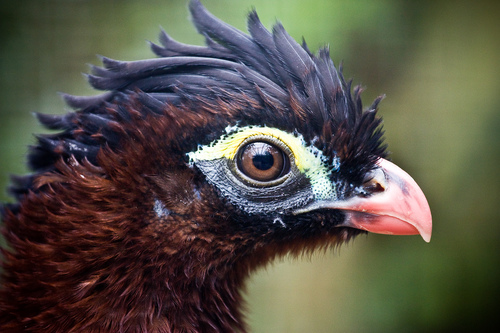
Nocturnal Curassow
Nothocrax urumutum
A shadow in the canopy and a ghost on the forest floor, the Nocturnal Curassow is one of the world's most mysterious birds. Only those with the most patient cameras ever catch a glimpse of this orange-billed wonder of the Amazon night.
Quick Identification
Size
50–58 cm (20–23 inches) in length; weight approximately 1.2–1.3 kg (2.6–2.8 lbs)
Colors
Deep rufous and chestnut-brown plumage; black crest; bright orange-red bill; yellow facial skin around the eyes
Key Features
- Distinctive black curly crest
- Bright orange-red bill with yellow skin at the base
- Uniformly rufous-brown body plumage
- Large dark eyes optimized for low-light vision
When You’ll See Them
Behavior
The Nocturnal Curassow is a true enigma of the Amazonian rainforest. Unlike almost all other members of the Cracidae family, this species is strictly nocturnal, spending its daylight hours concealed in the thickest tangles of vines or high in the canopy. It is most famous for its haunting, rhythmic song—a series of low-frequency hums and booms that can carry over long distances through the humid night air, often used to establish territory and attract mates.
When active, they move with a quiet, deliberate grace. While they spend much of their time in the trees, they descend to the forest floor under the cover of darkness to forage. They are incredibly shy and sensitive to light and noise; at the first sign of a threat, they will either freeze perfectly still, relying on their rufous plumage to blend into the shadows, or slip away into the undergrowth without making a sound. Because of their secretive nature and remote habitat, they are one of the most difficult birds to observe in the wild.
EverydayEarth exclusive
Camera Tips
Capturing a Nocturnal Curassow on camera is considered a 'holy grail' for many wildlife photographers. Because they are strictly nocturnal and highly sensitive, you must use a 'No-Glow' or 'Black Flash' infrared camera. Standard 'Low-Glow' LEDs emit a faint red glimmer that these birds can see, which will often cause them to flush or avoid the area in the future. Position your camera along established game trails near riverbanks or in areas where you have found large, fallen soft fruits, which are their primary food source on the ground.
Set the camera height low, roughly 12 to 15 inches off the forest floor, to capture their profile as they forage. Since these birds move slowly and cautiously, a fast trigger speed is less critical than a high-quality sensor that can handle low-light grain. We highly recommend using video mode with 20-second clips. The Nocturnal Curassow's movements are very subtle, and a still photo may look like a brown blur or a rock, whereas video will capture their distinctive 'bobbing' walk and potentially their low-frequency booming calls.
If you are lucky enough to locate a 'singing tree'—a specific perch where a male calls every night—place your camera on a nearby trunk facing the likely approach path. Do not place the camera directly on the singing tree, as the vibration or scent of the setup may disturb them. In the humid Amazonian basin, lens fogging is a major issue; use a rain hood or a small awning over the camera lens and include extra-large desiccant packs inside the housing to ensure your nighttime shots remain crisp and clear.
Similar Species
Species that look similar or are commonly confused with Nocturnal Curassow.
Salvin's Curassow
Much larger and primarily black with a white belly; it is strictly diurnal, whereas the Nocturnal Curassow is rufous and active only at night.
Great Curassow
Females can be reddish-brown, but they have a much more prominent, curly crest and yellow knob on the bill, and are active during the day.
Frequently Asked Questions
Record Nocturnal Curassow at your habitat
Connect a camera to start building your own species record — AI identifies every visitor automatically.