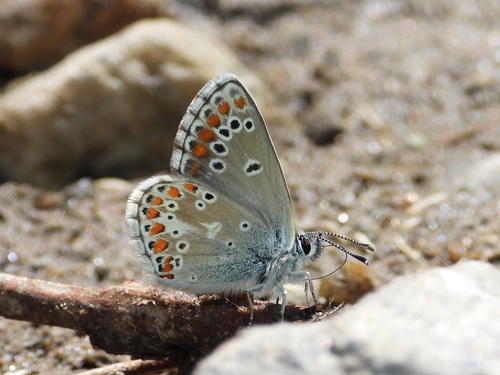
Northern Brown Argus
Aricia artaxerxes
A chocolate-colored jewel of the northern grasslands, the Northern Brown Argus is famous for the tiny white 'beauty mark' on its wings. This sun-loving butterfly is a specialist species that rewards the patient observer with flashes of brilliant orange and intricate spotting.
Quick Identification
Size
Wingspan of 25–31 mm (approximately 1.0–1.2 inches).
Colors
Rich chocolate brown upper wings with orange spots (lunules) along the edges; a distinctive small white spot is often visible in the center of the forewing.
Key Features
- Distinctive white spot in the center of the upper forewing
- Row of bright orange lunules along wing edges
- Fringed white margins on the outer wing edges
- Pale grayish-brown underside with a pattern of black-centered white spots
When You’ll See Them
Behavior
The Northern Brown Argus is a relatively sedentary butterfly, often spending its entire life within a few hundred meters of where it hatched. Because it is highly specialized, its behavior is closely tied to the presence of its primary food source, the Common Rock-rose. On sunny days, you will see them flying low to the ground with a quick, darting flight pattern as they move between nectar sources like Wild Thyme or Bird's-foot Trefoil.
These butterflies are avid sun-bathers. In the morning or during intermittent clouds, they bask with their wings spread wide to absorb thermal energy. During the late afternoon, they exhibit a social roosting behavior where several individuals may gather on the same tall grass head or flower spike. They rest head-downwards, making them easier to observe and photograph as they become lethargic in the cooler evening air.
EverydayEarth exclusive
Camera Tips
To capture the Northern Brown Argus on a backyard or trail camera, focus on 'micro-habitats' rather than wide-open spaces. Because these butterflies stay low to the ground, your camera should be mounted no more than 6 to 12 inches high. Use a macro lens or a camera with a very short minimum focus distance. Position the lens toward a patch of Common Rock-rose or Wild Thyme, as these are the high-traffic zones for both egg-laying and nectaring.
Lighting is the most critical factor for this species. They are almost exclusively active in bright, direct sunlight. If you are using an AI-powered camera, ensure the sensor is not shaded by overhanging branches, as the butterfly will likely skip over those areas. For the best identification shots, aim for a top-down angle to capture the signature white spot on the forewing, or a side-profile angle to document the intricate black-and-white spotting on the underside of the wings.
While you cannot bait butterflies with traditional food lures used for mammals, you can create a 'natural lure' by planting their host plants in a sheltered, south-facing corner of your garden. If you are using a trail camera with a trigger, set it to the highest sensitivity and shortest trigger interval. These butterflies move rapidly and are small; a slow camera will often miss the 'take-off' or 'landing' which are the best moments for clear AI identification. Late July is the absolute peak window for activity in most northern regions.
Similar Species
Species that look similar or are commonly confused with Northern Brown Argus.
Frequently Asked Questions
Record Northern Brown Argus at your habitat
Connect a camera to start building your own species record — AI identifies every visitor automatically.