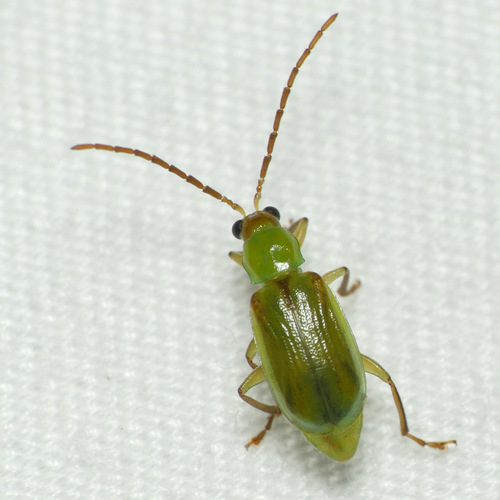
northern corn rootworm
Diabrotica barberi
A gem-like visitor of the late-summer garden, the northern corn rootworm is a master of finding the best pollen in town. Though tiny, these vibrant green beetles are a fascinating example of how agricultural insects adapt to our backyard landscapes.
Quick Identification
Size
Small and slender, typically 5–6 mm (0.2–0.24 inches) in length.
Colors
Uniformly pale green to yellowish-green across the entire body, including the wing covers (elytra).
Key Features
- Solid pale green color without any black stripes or spots
- Slender, elongated oval body shape
- Antennae roughly half the length of the body
- Smooth, slightly shiny wing covers
When You’ll See Them
Behavior
The northern corn rootworm is a highly mobile beetle known for its seasonal migrations. While the larvae spend their lives underground feeding on the roots of corn plants, the adults emerge in mid-to-late summer to seek out pollen-rich environments. In a backyard setting, you are most likely to observe them as 'pollen specialists.' They are active fliers and will move from agricultural fields into residential gardens as corn silks begin to dry out, seeking the fresh resources found in ornamental flowers.
These beetles are not particularly social but are often found in high densities on a single flower head because they are all attracted to the same food source. They are gentle and do not bite or sting humans, though they can be quite flighty when approached. In the late afternoon, they may be seen resting on the underside of leaves to avoid the direct heat of the sun or to hide from predators like birds and larger predatory insects.
EverydayEarth exclusive
Camera Tips
Capturing high-quality footage of the northern corn rootworm requires a specialized approach due to their diminutive size. Standard trail cameras usually have a minimum focus distance of 3 to 5 feet, which is too far for a 6mm insect. To get clear shots, you must use a camera with macro capabilities or add a 'close-up' lens attachment to your existing setup. Place your camera just 6 to 10 inches away from a high-traffic flower head, such as goldenrod or a sunflower, as these are the most reliable magnets for these beetles in late summer.
Stability is your best friend when filming insects. Even a slight breeze can move a flower out of the frame or cause the camera to lose focus. Use a sturdy tripod or a ground stake to keep the camera perfectly still. If your AI-powered camera has a 'Time-Lapse' mode or a 'Short-Range' motion trigger, enable it. Because these beetles move slowly while feeding on pollen, a time-lapse interval of one photo every 5-10 seconds can create a fascinating look at their foraging behavior without filling up your SD card with empty frames.
Lighting is the final piece of the puzzle. The pale green body of the northern corn rootworm can easily become 'blown out' or overexposed in direct, midday sunlight. For the best color saturation and detail, aim for the 'golden hours' of early morning or late afternoon. If you are filming during the middle of the day, try to position your camera so the flower is in dappled shade. This softens the light and allows the camera's sensor to pick up the subtle textures of the beetle's elytra and antennae. Avoid using a flash, as the reflective surface of the beetle's wings will create a distracting white glare.
Similar Species
Species that look similar or are commonly confused with northern corn rootworm.
Frequently Asked Questions
Record northern corn rootworm at your habitat
Connect a camera to start building your own species record — AI identifies every visitor automatically.