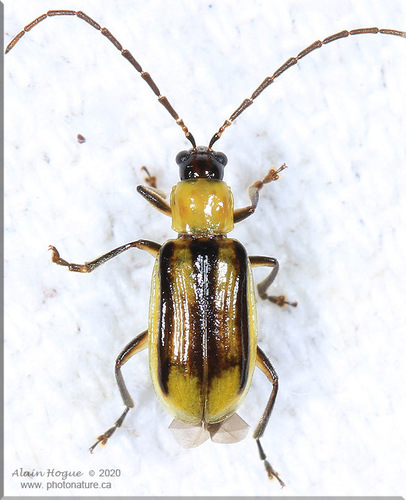
Western Corn Rootworm
Diabrotica virgifera
A striking yellow-and-black beetle with a big reputation, the Western Corn Rootworm is a fascinating study in miniature survival. Often found dancing among corn silks and summer blooms, this active insect is a hallmark of the midwestern garden.
Quick Identification
Size
Adults measure 5 to 8 mm (0.2 to 0.3 inches) in length
Colors
Yellowish body; females have three distinct black stripes on wing covers, while males often have more solid black or blurred markings covering the rear half
Key Features
- Yellow or lime-green base color
- Three black longitudinal stripes on wing covers (elytra)
- Antennae are nearly as long as the body
- Black-colored 'knees' (tibiae)
When You’ll See Them
Behavior
The Western Corn Rootworm is known as a 'billion-dollar bug' because of its impact on agriculture, but in a backyard setting, it is a highly active and visible beetle during the summer months. The life cycle begins underground, where larvae hatch and feed exclusively on the roots of corn plants, which can cause the plants to lean or fall over. As they transition into the adult beetle stage, they emerge from the soil to find mates and feed on more visible parts of the plant.
Adults are strong fliers and are highly attracted to the scent and texture of corn silk, pollen, and tassels. While they are most famous for their relationship with corn, they aren't picky eaters once they reach adulthood and will often be seen exploring large-petaled flowers or vegetable patches. They are non-aggressive toward humans but are extremely wary; they will quickly drop to the ground or fly away if they detect a large shadow or sudden movement nearby.
EverydayEarth exclusive
Camera Tips
Capturing the Western Corn Rootworm requires a specialized approach because of their small size and specific habitat. To get high-quality footage or photos, you should place your AI camera as close as possible to 'hotspots' like corn silks or the center of large, pollen-heavy flowers like sunflowers and zinnias. Use a macro lens attachment if available, as these beetles are only about the size of a grain of rice. Focus your camera on the area where the corn ear meets the stalk, as this is where adults congregate to feed on the tender silk.
Lighting is crucial for iridescent or patterned insects. Position your camera so that it is not looking directly into the sun, but rather has the sun illuminating the beetle from the side or behind the camera. This will highlight the contrast between their yellow bodies and black stripes. Because these beetles are most active during the heat of the day, midday is actually the best time for capturing movement, though the harsh light may require you to use a small diffuser or place the camera in a spot with dappled shade.
Since Western Corn Rootworms are easily spooked by motion, a fixed trail camera is actually superior to a handheld phone camera. Set your camera to a high-speed 'burst' mode or high-frame-rate video. They move in short, jerky bursts and often take flight suddenly. If you are specifically looking to attract them for a photo, planting a small 'trap crop' of late-maturing corn or bright yellow flowers can draw them into your camera’s field of view throughout the late summer.
Similar Species
Species that look similar or are commonly confused with Western Corn Rootworm.
Northern Corn Rootworm
The Northern variety is usually a solid pale green or tan color and lacks the distinct black stripes found on the Western species.
Striped Cucumber Beetle
It has a black abdomen (underside) and more defined, continuous stripes that reach the very end of the wing covers.
Spotted Cucumber Beetle
Easily distinguished by the 12 black spots on its yellow back rather than stripes.
Frequently Asked Questions
Record Western Corn Rootworm at your habitat
Connect a camera to start building your own species record — AI identifies every visitor automatically.