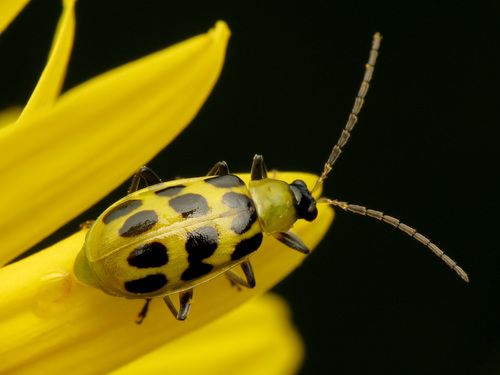
Spotted Cucumber Beetle
Diabrotica undecimpunctata
With its neon-green coat and twelve bold black spots, the Spotted Cucumber Beetle is a striking garden visitor that is as much a marvel to look at as it is a challenge for gardeners. This active leaf beetle is a master of the macro-world, often found deep within the golden blossoms of summer squash.
Quick Identification
Size
5-6 mm (0.20-0.24 inches) in length
Colors
Bright yellowish-green to chartreuse wing covers with twelve distinct black spots; black head, legs, and antennae.
Key Features
- Bright chartreuse or yellowish-green elytra
- Twelve distinct black spots arranged in three rows
- Black head and long, dark antennae
- Slender, oblong body shape
When You’ll See Them
Behavior
The Spotted Cucumber Beetle is a highly active and mobile insect frequently found darting between plants in suburban gardens and agricultural fields. While they may resemble ladybugs at a glance due to their spots, they are actually members of the leaf beetle family and move with a much more frantic, skittish energy. They are strong fliers and are often the first pests to arrive in a spring garden, emerging from their overwintering spots in leaf litter or woody edges once temperatures consistently rise above 50°F.
These beetles are solitary foragers but often congregate in large numbers where food is abundant, particularly inside the large, protective blossoms of squash and pumpkins. Beyond their eating habits, they are known vectors for plant diseases; as they move from plant to plant, they can inadvertently spread bacterial wilt and mosaic viruses, making them a significant focus for backyard gardeners monitoring their crops.
EverydayEarth exclusive
Camera Tips
Capturing the Spotted Cucumber Beetle requires a specialized approach because of its small size. Standard trail cameras usually have a minimum focus distance of several feet, which will result in a blurry smudge for an insect this small. For the best results, use a camera with macro capabilities or an AI-powered backyard camera designed for close-up wildlife. Mount the camera just 6 to 10 inches away from a high-traffic area, such as a large zucchini or pumpkin blossom. These yellow flowers act as natural stages, and the beetle’s lime-green body provides a stunning contrast against the orange-yellow petals.
Placement is everything with these beetles. Since they are attracted to the color yellow, you can 'bait' your camera's field of view by planting yellow marigolds or sunflowers nearby. Position your lens so it is looking slightly downward into the cup of a flower; the beetles often spend several minutes deep inside the bloom feeding on pollen, giving your camera’s AI plenty of time to trigger and focus. If you are using a manual trigger or time-lapse, mid-morning is the 'golden hour' for activity as the beetles move to flowers to feed after the morning dew has evaporated.
To get the clearest shots, ensure there are no stray leaves or blades of grass between the lens and the target flower, as the camera's autofocus may jump to the moving foliage instead of the beetle. If your camera allows for shutter speed adjustments, keep it fast (1/250s or higher) to freeze the beetle's movement. Because they are so reflective, avoid using a direct flash, which can wash out their signature black spots; instead, rely on the bright, indirect light of a partly cloudy day for the most professional-looking captures.
Similar Species
Species that look similar or are commonly confused with Spotted Cucumber Beetle.
Frequently Asked Questions
Record Spotted Cucumber Beetle at your habitat
Connect a camera to start building your own species record — AI identifies every visitor automatically.