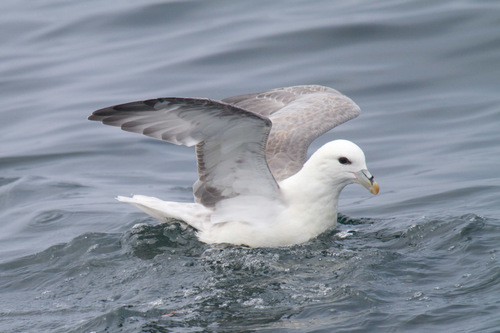
Northern Fulmar
Fulmarus glacialis
The Northern Fulmar is the 'stiff-winged' sentinel of the sea, a hardy survivor that thrives in the windiest corners of the North Atlantic and Pacific. With their signature tubular noses and incredible gliding abilities, they are a captivating sight for any coastal observer.
Quick Identification
Size
Length: 18–20 in (45–51 cm); Wingspan: 40–44 in (102–112 cm); Weight: 1–2.2 lbs (450–1,000 g)
Colors
Light morphs have a white head and chest with grey wings; dark morphs are a uniform smoky-grey. Both feature a yellowish-olive bill.
Key Features
- Distinctive 'tube-nose' nostrils on top of the bill
- Thick, 'bull-necked' profile compared to gulls
- Stiff-winged gliding flight style
- Dark patch around the eye on light morph birds
When You’ll See Them
Behavior
Northern Fulmars are the rugged aviators of the open ocean, spending the vast majority of their lives at sea and only returning to land to breed on steep coastal cliffs. Unlike gulls, which they superficially resemble, fulmars are part of the 'tube-nose' family, making them closer relatives to albatrosses. They are exceptionally social within their colonies, often engaging in loud, guttural cackling displays and rhythmic head-bobbing to greet their mates or defend their nesting space.
The most famous aspect of their behavior is their unique defense mechanism. When threatened, both adults and chicks can accurately spray a foul-smelling, waxy stomach oil at intruders. This oil is not just a deterrent; it can strip the waterproofing from the feathers of other predatory birds, making it a highly effective and dangerous weapon. Despite this prickly defense, they are incredibly curious birds and will often glide within feet of cliff-watchers or follow fishing vessels for miles to scavenge for scraps.
EverydayEarth exclusive
Camera Tips
Capturing Northern Fulmars requires a strategic approach since they don't frequent typical backyard feeders. If you have a coastal property or access to cliff-top overlooks, position your camera on a stable tripod or mount it to a sturdy rail overlooking a ledge. Because of the intense salt spray in these environments, ensure your camera has a high IP weather-resistance rating or use a dedicated waterproof housing. It’s also wise to wipe the lens with a microfiber cloth frequently to prevent salt-crust from blurring your shots.
Fulmars are masters of using updrafts. To get the best action shots, point your camera toward the edge of a cliff where the wind hits the face; they will often 'hover' in the wind for several seconds, providing a perfect window for a motion-triggered capture. Set your shutter speed to at least 1/2000th of a second if your camera allows manual overrides, as their flight is incredibly steady but fast. If using an AI-triggered camera, increase the sensitivity to high, as their gliding motion is very smooth and can sometimes fail to trigger sensors designed for more erratic movements.
Lighting is your biggest challenge on the coast. To avoid washing out the brilliant white of a light-morph Northern Fulmar, try to position your camera so the sun is at your back, or shoot during the 'blue hour' just before sunrise when the light is diffused. Avoid using a flash, as the reflection off the white plumage will result in a 'blown-out' image and may startle the birds. Instead, rely on high ISO settings or natural daylight. If you are aiming to capture their unique 'tube-nose' anatomy, side-lighting during the golden hour is best for creating shadows that highlight the bill's structure.
Similar Species
Species that look similar or are commonly confused with Northern Fulmar.
Frequently Asked Questions
Record Northern Fulmar at your habitat
Connect a camera to start building your own species record — AI identifies every visitor automatically.