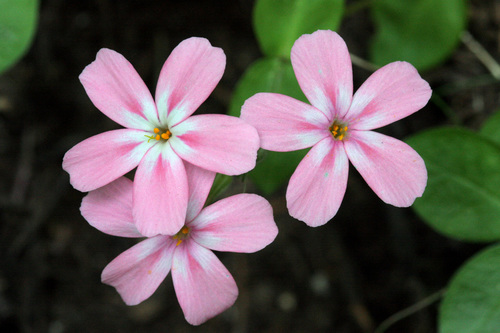
northern phlox
Phlox adsurgens
A woodland gem of the Pacific Northwest, the northern phlox paints the forest floor in shades of rose and pink. This low-growing perennial is a vital early-season nectar source for native pollinators.
Quick Identification
Size
Low-growing groundcover with stems up to 30 cm (12 in) long; flowers are approximately 2.5 cm (1 in) in diameter.
Colors
Soft pink to deep rose petals, often featuring a distinct white or pale star-shaped center; foliage is a glossy dark green.
Key Features
- Low-growing, decumbent stems that root at the nodes
- Symmetrical five-lobed pink flowers in small clusters
- Opposite, oval to elliptical leaves 1-3 cm in length
When You’ll See Them
Geographic range
Where Does the northern phlox Live?
Native to the Pacific Northwest of North America, the northern phlox is a regional specialist found almost exclusively in the United States. Its core range spans the mountain corridors of Oregon and extends down into the northern Coast Ranges of California, particularly within the biodiversity-rich Siskiyou and Klamath Mountains. It thrives in the dappled sunlight of coniferous and mixed-deciduous forests, rarely wandering far from the cool, moist climates of these coastal-influenced ranges.
Basemap © OpenStreetMap contributors
Behavior
During the spring and early summer, the plant undergoes a dramatic transformation as it sends up short, erect flowering branches. These clusters of pink blossoms are not just for show; they are a vital nectar source for early-season pollinators. While the plant remains relatively dormant during the cold winter months of the Pacific Northwest, its evergreen-to-semi-evergreen leaves allow it to jump-start photosynthesis as soon as the snow melts and temperatures rise.
EverydayEarth exclusive
Camera Tips
Macro photography is the gold standard for this species. If your camera has a dedicated macro lens or setting, use it to capture the intricate white 'eye' at the center of the flower and the fine textures of the oval leaves. For backyard enthusiasts who have planted northern phlox as groundcover, a time-lapse sequence is highly recommended. Set your camera to take a photo every 20 minutes from late April through May; you will see the incredible 'carpet effect' as the green mat is slowly overtaken by dozens of pink blossoms.
Since northern phlox is a magnet for pollinators, it’s a great spot to set up a 'pollinator watch.' Position your camera about two feet away from a healthy cluster of blooms and use a fast shutter speed or high-frame-rate video. This will allow you to capture clear footage of native bees, hoverflies, and butterflies as they visit the flowers. For the best lighting, aim for the 'golden hours' of early morning or late afternoon when the light is soft and even, highlighting the plant's natural rose-colored hues without the harsh glare of midday.
Similar Species
Species that look similar or are commonly confused with northern phlox.
Frequently Asked Questions
Record northern phlox at your habitat
Connect a camera to start building your own species record — AI identifies every visitor automatically.