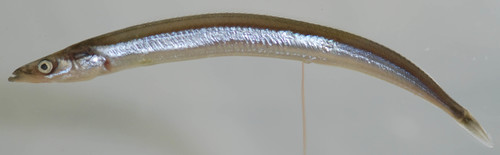
Northern Sand Lance
Ammodytes dubius
The Northern Sand Lance is the 'ecological gold' of the Atlantic, a shimmering, burrowing fish that sustains everything from humpback whales to Atlantic puffins.
Quick Identification
Size
Typically 15-25 cm (6-10 inches) in length, occasionally reaching 30 cm (12 inches).
Colors
Iridescent greenish-blue or brownish back, brilliant silver sides, and a white underbelly.
Key Features
- Elongated, eel-like body with a pointed snout
- Lower jaw projects forward beyond the upper jaw
- Long dorsal fin extending most of the body length
- No pelvic fins and a deeply forked tail
When You’ll See Them
Geographic range
Where Does the Northern Sand Lance Live?
The Northern Sand Lance is native to the chilly waters of the Northwest Atlantic Ocean. Its range begins in the subarctic regions off the coasts of Greenland and Labrador, extending southward through the Gulf of Maine. While they are primarily concentrated on offshore banks like Georges Bank and Stellwagen Bank, their presence is felt as far south as the continental shelf off North Carolina.
Basemap © OpenStreetMap contributors
Behavior
The Northern Sand Lance is a fascinating 'forage fish' known for its unique relationship with the seafloor. Unlike most fish, they lack a swim bladder, which means they must either swim constantly to stay suspended in the water column or rest on the bottom. To survive in a world full of predators, they have developed the remarkable ability to dive head-first into coarse sand, where they remain buried to hide from birds, whales, and larger fish. They often spend the night or periods of high predator activity completely submerged in the substrate.
These fish are highly social and form massive, shimmering schools that can contain tens of thousands of individuals. They are a critical 'mid-trophic' species, acting as a vital energy bridge between the plankton they eat and the massive marine mammals that rely on them for food. Their movements are largely dictated by the tide and the availability of light, as they are primarily visual feeders that hunt during the day.
EverydayEarth exclusive
Camera Tips
Capturing the Northern Sand Lance requires a specialized underwater setup, as this species prefers deeper, offshore waters compared to its inshore relatives. For coastal residents with access to a dock or a boat, a weighted 'drop camera' or a tethered underwater AI camera is the best approach. Focus your efforts on areas with coarse, sandy bottoms; the Northern Sand Lance avoids mud and silt because it clogs their gills when they attempt to burrow.
Timing is critical for these fish. They are visual hunters, so you will have the best luck during peak daylight hours when they emerge from the sand to feed on plankton. If you are using a stationary camera on the seafloor, look for 'sand waves' or ripples in the substrate—these are the preferred hiding spots where the fish dive for cover. High-frame-rate settings are recommended, as their movements are lightning-fast, especially when they are darting into the sand.
While you cannot easily 'bait' sand lance like you would a crab or a catfish, you can position your camera near structures that naturally concentrate plankton, such as the edge of a sandbar or near kelp forests where currents create eddies. In the late autumn, you might capture unique spawning behavior as they congregate over sandy plateaus. Ensure your camera housing is rated for at least 30-50 meters if you are attempting to view them in their primary offshore habitat.
Similar Species
Species that look similar or are commonly confused with Northern Sand Lance.
Frequently Asked Questions
Record Northern Sand Lance at your habitat
Connect a camera to start building your own species record — AI identifies every visitor automatically.