northern spicebush
Lindera benzoin
The 'forsythia of the wilds,' Northern spicebush is a fragrant powerhouse of the forest understory. Its early spring blooms and lipid-rich autumn berries make it a one-stop shop for backyard biodiversity.
Quick Identification
Size
6–12 feet (1.8–3.6 meters) in height and width
Colors
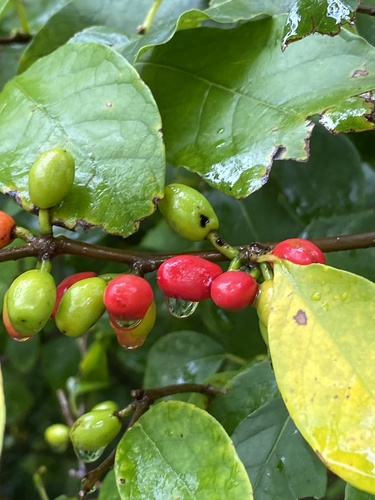
Bright green leaves turning golden yellow in fall; tiny greenish-yellow flowers; glossy scarlet-red berries on female plants.
Key Features
- Spicy, citrus-like aroma when leaves or twigs are crushed
- Clusters of tiny yellow flowers that bloom before leaves appear
- Oval-shaped, smooth-edged leaves arranged alternately
- Bright red, oblong berries (drupes) found on female shrubs in late summer
When You’ll See Them
Behavior
Northern spicebush is a slow-growing, deciduous shrub that plays a foundational role in the eastern forest understory. It is dioecious, meaning individual plants are either male or female. In early spring, the male plants produce slightly larger, showier yellow flowers to attract early-season pollinators, while the female plants produce the nutrient-dense red berries that are a favorite of woodland birds.
This shrub is most famous for its relationship with the Spicebush Swallowtail butterfly, serving as the primary host plant for its larvae. While the plant itself is stationary, it exhibits a fascinating 'behavior' of seasonal change—bursting into gold in the spring, providing lush green cover in summer, and turning a brilliant, glowing yellow in the autumn. It is relatively deer-resistant due to its aromatic oils, making it a resilient staple of the backyard landscape.
EverydayEarth exclusive
Camera Tips
When setting up a camera near a northern spicebush, focus your efforts on the 'wildlife traffic' it generates rather than just the plant itself. During the early spring (March-April), position your camera on a macro setting or close-focus mode aimed at the yellow blossoms. This is a prime spot to capture early-emerging pollinators and migratory birds like Phoebes that are hunting for the first insects of the season.
For the best action shots, target a female spicebush in late August through October. The high-fat red berries are an irresistible magnet for 'fruit-gulping' birds. Position your camera about 3-5 feet away from a berry-laden branch, ideally at a 45-degree angle to catch birds landing. You are likely to record Wood Thrushes, Gray Catbirds, and Great Crested Flycatchers as they fuel up for migration.
If you are interested in insect behavior, place a camera with a high frame rate near the leaves during mid-summer. Look for leaves that have been folded over and 'stitched' with silk; these are the hideouts of Spicebush Swallowtail caterpillars. You might catch the larvae emerging at night to feed or capture the moment a predatory wasp or bird comes searching for them.
Because spicebush thrives in damp, shaded areas, lighting can be a challenge. Ensure your camera is set to a higher ISO if it’s under a heavy canopy, or place it on the edge of the shrub where dappled sunlight can illuminate the subject. If your camera has a time-lapse feature, use it during the first two weeks of October to capture the dramatic transition of the foliage from deep green to brilliant gold.
Similar Species
Species that look similar or are commonly confused with northern spicebush.
Frequently Asked Questions
Record northern spicebush at your habitat
Connect a camera to start building your own species record — AI identifies every visitor automatically.