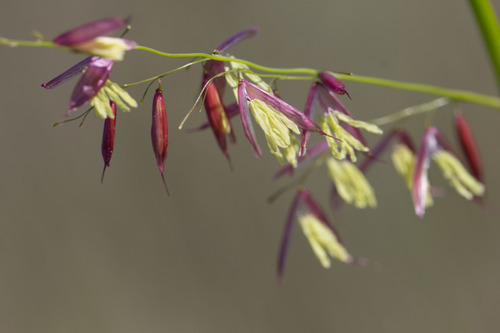
northern wild rice
Zizania palustris
A sacred 'good berry' that rises from the muck of northern lakes, Northern wild rice is a tall, elegant grass that sustains both people and wildlife. Experience the life cycle of this aquatic marvel through the lens of your trail camera.
Quick Identification
Size
Stalks reach 1-3 meters (3-10 feet) in height; grains are 1-2 cm (0.4-0.8 inches) long.
Colors
Bright green leaves and stems; flower heads feature yellowish-green male flowers and purplish female flowers; mature seeds are dark brown to black.
Key Features
- Tall, hollow aquatic stalks growing in shallow water
- Distinctive feathery flower panicles with female flowers above male
- Long, flat leaf blades up to 2 inches wide
- Grains encased in papery husks with long, needle-like awns
When You’ll See Them
Behavior
Northern wild rice is an annual aquatic grass that follows a dramatic seasonal cycle. It germinates underwater in early spring, initially producing thin, ribbon-like leaves that float on the surface. As the summer progresses, the plant develops stiff, hollow stems that rise several feet above the water level, eventually forming the dense 'stands' that characterize North American wetlands.
This species is wind-pollinated, with the upper female flowers maturing before the lower male flowers to encourage cross-pollination. Beyond its own growth, it serves as a critical ecosystem engineer, stabilizing shorelines and providing a nursery for fish and a high-protein food source for migratory birds. It is also a plant of immense cultural and spiritual significance to the Anishinaabe people, who have harvested it traditionally for centuries.
EverydayEarth exclusive
Camera Tips
To capture the full majesty of Northern wild rice, use a time-lapse setting on your camera. Start in late May to document the 'floating leaf' stage, and continue through September. Mount your camera on a secure, waterproof post in the water or a stable tree on the bank, roughly 4 feet high. An angled downward perspective allows you to see the transition from the water's surface to the towering aerial stalks.
During the ripening season in late August, wild rice becomes a hub for wildlife activity. Position your camera to face a dense stand where the seeds are beginning to drop. This is the best time to capture Wood Ducks, Mallards, and Trumpeter Swans as they move through the stalks to forage. Set your camera to 'Video' or 'Burst Mode' with a high trigger speed to catch the fast movements of birds weaving through the tall grass.
Light management is crucial when filming over water. To avoid washed-out images from sun glare, position the camera to face north or south rather than directly into the rising or setting sun. If your camera supports it, a polarizing filter will help cut the reflection on the water, revealing the submerged parts of the stalks and any fish or turtles lingering in the shadows of the rice bed.
Finally, pay attention to the wind. Northern wild rice moves beautifully in a breeze, creating a 'wave' effect across the lake. If your camera has a motion-sensitive video trigger, you may need to adjust the sensitivity down during windy days to avoid capturing hours of swaying grass, or use it to your advantage to create cinematic shots of the wetland in motion.
Similar Species
Species that look similar or are commonly confused with northern wild rice.
Frequently Asked Questions
Record northern wild rice at your habitat
Connect a camera to start building your own species record — AI identifies every visitor automatically.