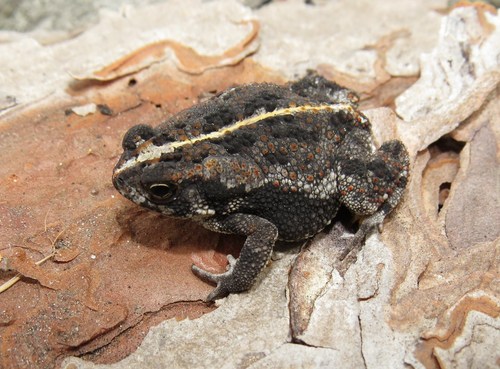
Oak Toad
Anaxyrus quercicus
Meet the Oak Toad, a pint-sized powerhouse and North America's smallest toad species. Distinguished by its signature 'racing stripe' and daytime hustle, this tiny amphibian is a master of the Southeastern pine forests and sandy backyards.
Quick Identification
Size
0.75 to 1.3 inches (19 to 33 mm)
Colors
Usually gray, brown, or nearly black with a prominent white, cream, or yellowish stripe running down the center of the back. Features 4 to 5 pairs of dark spots on the back.
Key Features
- Smallest toad species in North America
- Prominent light-colored stripe down the back
- Diurnal (active during the day) habits
- High-pitched 'peep' call similar to a chick
When You’ll See Them
Behavior
Unlike most of its nocturnal cousins, the Oak Toad is primarily diurnal, meaning you are most likely to spot it hopping through your garden during the bright hours of the day. They are incredibly active hunters, moving with quick, short hops as they search for food. Because of their tiny size, they are often mistaken for large insects or cricket frogs until you get a closer look at their stocky, warty bodies.
During the breeding season, which typically follows heavy summer rains, males congregate near shallow, temporary pools. Their call is a distinctive, high-pitched 'peep' that can be heard from a significant distance, often sounding more like a brood of baby chicks than a group of amphibians. In the backyard, they are highly beneficial as they have a voracious appetite for ants, helping to naturally manage insect populations.
EverydayEarth exclusive
Camera Tips
Capturing the Oak Toad on a backyard camera is a rewarding challenge because of its diminutive size. To get a clear shot, you must rethink your camera placement; mounting a camera at the standard height for deer or raccoons will result in the toad being a tiny, indistinguishable speck. Aim for a ground-level setup, placing the camera no more than 3 to 5 inches off the ground. If your camera allows for it, use a macro lens or a close-focus setting, as these toads are frequently just inches away from the lens when they pass by.
Since Oak Toads are diurnal, you won't need to rely on grainy infrared night shots. Instead, position your camera in a spot that receives dappled sunlight, such as the edge of a flower bed or a patch of sandy soil near leaf litter. These toads are attracted to areas with high ant activity, so placing your camera near an ant trail is the best way to ensure frequent 'visits.' Avoid using artificial baits, as their movement-based hunting style means they are only interested in live, crawling prey.
Motion sensors can sometimes struggle to detect a creature this small. To combat this, set your camera to a high sensitivity level or use a 'Time-Lapse' mode during the peak afternoon hours. A setting that takes a photo every 30 to 60 seconds between 1 PM and 4 PM—particularly after a summer thunderstorm—is a foolproof way to catch them as they emerge from their burrows to feast. Lastly, ensure the area directly in front of the lens is clear of tall grass blades, which can blow in the wind and trigger the sensor or obscure the tiny subject.
Similar Species
Species that look similar or are commonly confused with Oak Toad.
Frequently Asked Questions
Record Oak Toad at your habitat
Connect a camera to start building your own species record — AI identifies every visitor automatically.