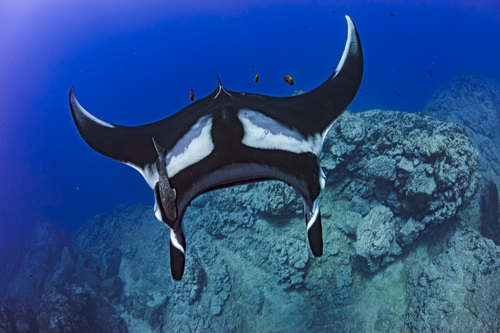
Oceanic Manta Ray
Mobula birostris
The Oceanic Manta Ray is the undisputed giant of the rays, a silent glider of the open seas with a wingspan that can rival a small aircraft. Known for their curiosity and intelligence, these gentle filter-feeders are a bucket-list discovery for any marine enthusiast.
Quick Identification
Size
Wingspan up to 7-9 meters (23-29 feet); weight up to 3,000 kg (6,600 lbs)
Colors
Dorsal side is typically black or deep blue with white 'T-shaped' shoulder markings; the ventral side is white with unique black spots and dark edges on the fins.
Key Features
- Massive diamond-shaped body with pointed wing-tips
- Two large cephalic fins extending from the front of the head
- Terminal mouth located at the very front of the body
- Unique spot patterns on the belly used for individual identification
When You’ll See Them
Behavior
The Oceanic Manta Ray is a highly intelligent and curious pelagic species, often referred to as the 'gentle giant' of the deep. Unlike many other rays, they do not spend their time resting on the sea floor; instead, they are constant travelers, cruising the open ocean and visiting specific seamounts or offshore reefs. They are famous for their social nature and are often observed interacting with divers or performing spectacular aerial breaches, leaping entirely out of the water to communicate or remove parasites.
These rays exhibit complex social behaviors and frequent 'cleaning stations' where small reef fish remove parasites from their skin. Despite their intimidating size, they are entirely harmless to humans, lacking the venomous stinger found in many of their relatives. They are known for their inquisitive nature, often circling observers to get a better look, suggesting a level of cognitive awareness and curiosity rarely seen in the fish world.
EverydayEarth exclusive
Camera Tips
To capture the Oceanic Manta Ray on camera, you must think beyond the terrestrial backyard. For those with 'ocean backyards' or access to coastal moorings, setting up a stationary underwater housing is the gold standard. Position your camera near known cleaning stations—underwater rocky outcrops or coral heads where smaller fish congregate. Because of their immense size, ensure your camera is set at a wide-angle (120° or more) and placed at least 10-15 feet away from the anticipated swim path to avoid clipping their wingspan in the frame.
Lighting is the most significant hurdle when filming these giants. Natural light is best during midday when the sun is directly overhead, penetrating the water column with maximum clarity. This is essential for AI-powered cameras to distinguish the 'T-shape' shoulder markings. If you are using a remote-triggered setup, avoid using high-intensity flashes which can startle the rays; instead, opt for high-lumen continuous LED lights with a soft diffuser to reveal the intricate patterns on their ventral side without creating harsh shadows.
For the best identification results, position your camera on the seabed or a reef ledge angled upward. This 'belly-up' perspective is crucial because the spot patterns on a Manta's underside are unique to each individual, acting like a biological fingerprint. Capturing clear images of these spots allows you to contribute your data to global citizen science databases, helping researchers track the migration and health of specific individuals across the globe.
Finally, consider the environmental conditions of your camera site. Manta Rays are often most active where currents converge, as these areas concentrate the plankton they feed on. Use a sturdy, weighted tripod or a permanent mooring mount to ensure your camera stays stable against the surge. Check your housing's seals and include a fresh desiccant pack inside to prevent the lens from fogging when the temperature drops, ensuring every frame of these majestic gliders is crystal clear.
Similar Species
Species that look similar or are commonly confused with Oceanic Manta Ray.
Frequently Asked Questions
Record Oceanic Manta Ray at your habitat
Connect a camera to start building your own species record — AI identifies every visitor automatically.