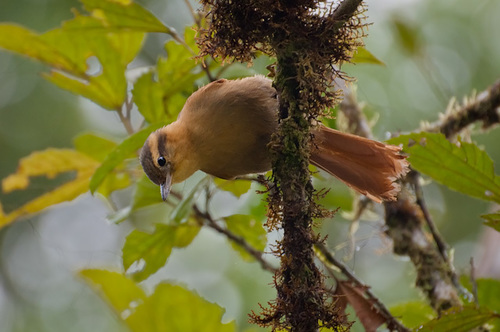
Ochre-breasted Foliage-gleaner
Anabacerthia lichtensteini
A restless acrobat of the South American canopy, the Ochre-breasted Foliage-gleaner is a master of the Atlantic Forest. Recognized by its golden throat and bold 'eyebrow,' this active bird is a highlight for any backyard camera enthusiast in its range.
Quick Identification
Size
14–16 cm (5.5–6.3 in) long; weighs approximately 20–26 g (0.7–0.9 oz)
Colors
Olive-brown upperparts, pale ochre or buff throat and breast, distinctive pale buff supercilium (eyebrow)
Key Features
- Prominent pale buff eyebrow and postocular stripe
- Warm ochre-colored throat and chest
- Slender, slightly upturned bill
- Olive-brown crown and mantle
When You’ll See Them
Geographic range
Where Does the Ochre-breasted Foliage-gleaner Live?
Native to the South American continent, the Ochre-breasted Foliage-gleaner is a specialist of the lush Atlantic Forest. Its core range is concentrated in southeastern Brazil, stretching from the state of Espírito Santo down to Rio Grande do Sul. This distribution extends westward into the moist forests of eastern Paraguay and the Misiones province of northeastern Argentina, where it thrives in well-preserved woodland corridors.
Basemap © OpenStreetMap contributors
Behavior
The Ochre-breasted Foliage-gleaner is a high-energy acrobat of the forest mid-story. Unlike many of its relatives that spend their time rummaging through dead leaf clusters, this species is a specialist in gleaning insects from live green foliage. It is frequently seen hanging upside down or performing daring stretches to inspect the undersides of leaves, moving with a restless, jerky momentum that makes it a delight to watch on camera.
This bird is highly social within its ecosystem, almost exclusively seen as a member of mixed-species foraging flocks. It travels alongside woodcreepers and other ovenbirds, acting as a core member of these traveling parties. While it is generally shy toward humans and stays within the forest interior, it can be quite bold when focused on a meal, often ignoring observers if they remain still. It is a non-migratory resident, maintaining a consistent territory throughout the year.
EverydayEarth exclusive
Camera Tips
To successfully capture an Ochre-breasted Foliage-gleaner on your AI camera, you must think vertically. These birds rarely visit the forest floor, so mounting your camera at eye level or higher is essential. If you have a backyard bordering a woodland, try securing the camera 10 to 15 feet up a tree trunk, angled toward a dense cluster of live foliage or a horizontal branch that serves as a natural 'highway' for mixed-species flocks.
While they are unlikely to visit a standard seed feeder, they are highly attracted to the sound of moving water. A high-platform birdbath equipped with a solar-powered dripper or mister can be an incredible draw. The movement and sound of the water will signal a reliable drinking and bathing spot to birds traveling in the canopy, bringing them down into your camera's field of view. Ensure your camera is positioned to capture the area just above the water where they will likely perch before diving in.
Because these birds move rapidly and rarely stay still for more than a second, use a high-speed trigger setting. Set your camera to 'Burst Mode' to take at least three photos per trigger event. This increases your chances of getting a clear, blur-free shot of the bird's distinctive ochre breast and pale eyebrow. Early morning light is the most flattering for their earth-toned plumage; try to position the camera facing north or south to avoid the harsh glare of the rising sun while still benefiting from the peak activity hours of 7:00 AM to 9:00 AM.
Similar Species
Species that look similar or are commonly confused with Ochre-breasted Foliage-gleaner.
Frequently Asked Questions
Record Ochre-breasted Foliage-gleaner at your habitat
Connect a camera to start building your own species record — AI identifies every visitor automatically.