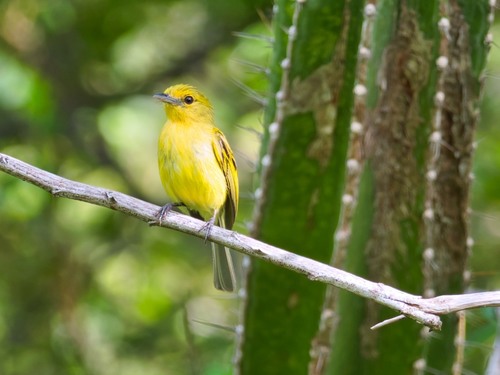
Ochre-lored Flatbill
Tolmomyias flaviventris
With its sun-drenched plumage and specialized wide bill, the Ochre-lored Flatbill is a master of the tropical canopy. Known for building gravity-defying hanging nests, this charismatic flycatcher brings a flash of gold to backyard gardens across South America.
Quick Identification
Size
Length of 12-13 cm (4.7-5.1 inches); weight approximately 11-13 grams (0.4-0.5 oz)
Colors
Olive-green upperparts, vibrant yellow underparts (brightest on breast), buff-colored facial lores, and two yellowish wing bars.
Key Features
- Broad, flattened bill with a small hook
- Distinctive ochre or buff-colored lores (area between eye and bill)
- Vibrant yellow breast and belly
- Olive-green crown and back with pale wing bars
When You’ll See Them
Geographic range
Where Does the Ochre-lored Flatbill Live?
This bird is a quintessential resident of South and Central America, thriving in the tropical lowlands east of the Andes. Its native range spans from the Panama Canal Zone across Colombia and Venezuela, extending through the Guianas and southward into the vast Amazon basin of Brazil and northern Bolivia. It is also a very common sight on the Caribbean islands of Trinidad and Tobago, where it often visits suburban parks and gardens.
Basemap © OpenStreetMap contributors
Behavior
One of their most fascinating behaviors is their intricate nest-building. They construct long, pear-shaped, hanging nests made of dark, wiry plant fibers. These nests often feature a side entrance and are frequently located near wasp nests, a clever strategy used to deter potential predators like monkeys or larger birds. Despite being small, they are quite bold and will defend their nesting territory with persistent vocalizations.
EverydayEarth exclusive
Camera Tips
Since they are insect-eaters, traditional seed feeders won't attract them. Instead, the absolute best lure is a moving water source. A shallow birdbath equipped with a solar-powered dripper or a small fountain is irresistible to them, especially in the heat of the afternoon. The sound of splashing water will draw them down from the high canopy for a drink or a bath, bringing them right into your camera's field of view.
Set your camera to a high-speed trigger mode or 'Action' setting. These birds are fast and rarely stay still for long; a trigger speed of 0.2 seconds or faster is ideal to catch them mid-flight or during a sally. If your camera supports video, use short 10-second clips at 60fps to capture their distinctive tail-flicking and head-cocking behaviors. Early morning light provides the best illumination for their yellow feathers without blowing out the highlights.
If you are lucky enough to spot one of their hanging nests—which look like a clump of dark, dried grass dangling from a branch—position your camera at least 15 feet away. Use a zoom lens if possible to avoid disturbing the parents. Watching the adults return with insects is a fantastic way to document their lifecycle, but always prioritize the bird's safety by keeping a respectful distance from the nesting site.
Similar Species
Species that look similar or are commonly confused with Ochre-lored Flatbill.
Frequently Asked Questions
Record Ochre-lored Flatbill at your habitat
Connect a camera to start building your own species record — AI identifies every visitor automatically.