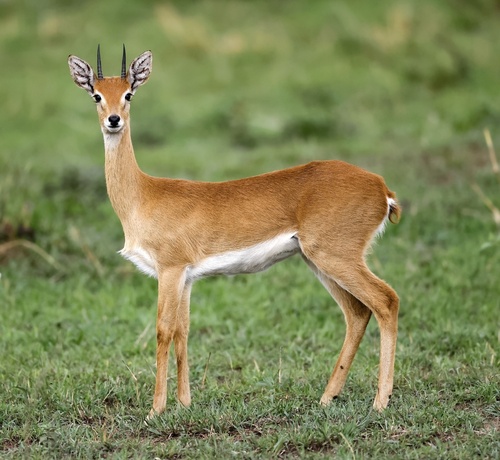
Oribi
Ourebia ourebi
A master of the open plains, the Oribi is a graceful, small-statured antelope known for its distinctive whistle and impressive vertical leaps. Often seen in monogamous pairs, these grassland specialists are a prized find for any camera enthusiast.
Quick Identification
Size
Shoulder height: 50–67 cm (20–26 in); Weight: 12–22 kg (26–49 lb)
Colors
Glossy yellowish to rufous-brown coat with a white chin, throat, and underbelly; distinctive black glandular patch below each ear.
Key Features
- Slightly hunched back with long, slender legs
- Male-only straight, ringed horns 8-18 cm (3-7 in) long
- Distinctive circular black scent gland visible below the ear
- Short, bushy tail with a black tip
When You’ll See Them
Behavior
The oribi is a delicate yet hardy antelope known for its unique social structures, often found in monogamous pairs or small "harems" consisting of one male and two females. Unlike many other small antelopes that prefer thick cover, oribi are masters of the open grassland. They are highly territorial, marking their boundaries with secretions from their preorbital glands and through communal dung heaps known as middens.
When threatened, an oribi will often remain motionless in tall grass until the last possible second before bolting. They are famous for their "stotting" behavior—high, stiff-legged vertical leaps used to signal to predators that they have been spotted and are too fit to be caught. To humans, they are generally shy but can become habituated to peaceful observers in protected areas or private conservancies.
EverydayEarth exclusive
Camera Tips
Capturing the elusive oribi on camera requires a strategic approach to height and placement. Because these antelopes stand only about two feet tall at the shoulder, your camera should be mounted low—roughly 30 to 45 centimeters (12 to 18 inches) off the ground. Angling the camera slightly upward can help capture their facial features and those critical diagnostic black glands below their ears. Look for 'lawns' of short grass adjacent to taller tufts; oribi love to feed in the open but stay close to cover where they can disappear instantly.
Oribi are creatures of habit and strictly territorial. If you spot a dung heap (midden) in an open field, you have found a goldmine for camera placement. They return to these spots frequently to reinforce their scent. Another great trick is to position your camera near a natural salt lick or a permanent water source during the dry season. While they aren't easily lured by food bait, providing a clean, low-profile water basin in a grassland setting can often entice them to linger within your camera's frame for a better shot.
Lighting is crucial for oribi photography. Since they are most active during the 'golden hours' of dawn and dusk, ensure your camera has a fast trigger speed and high low-light sensitivity. Set your device to take multi-shot bursts (3-5 photos) or short 10-second videos. This is particularly effective for catching their high-speed 'stotting' or the way they flick their short, black-tipped tails when curious. If your camera allows, use a PIR (Passive Infrared) sensitivity setting of 'High' to ensure the movement of a small antelope at a distance still triggers the sensor.
Similar Species
Species that look similar or are commonly confused with Oribi.
Frequently Asked Questions
Record Oribi at your habitat
Connect a camera to start building your own species record — AI identifies every visitor automatically.