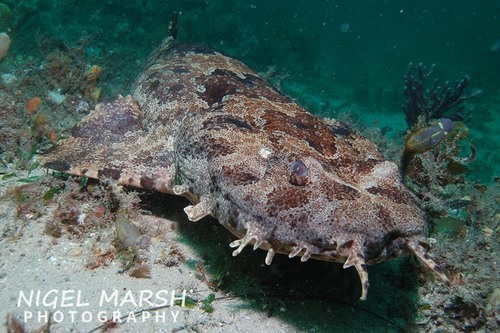
Ornate Wobbegong
Orectolobus ornatus
A master of disguise and a jewel of the Australian reef, the Ornate Wobbegong is the ultimate underwater ambush artist. With its intricate patterns and shaggy 'beard,' this carpet shark blends perfectly into the seabed, waiting for the cover of night to begin its hunt.
Quick Identification
Size
Typically grows up to 120 cm (3.9 ft) in length
Colors
Golden-brown base with intricate patterns of yellow-green, blue-grey, and dark brown markings; ventral side is pale
Key Features
- Broad, flattened head and body
- Elaborate 'beard' of branched skin tassels around the mouth
- Intricate 'carpet' pattern with butterfly-shaped dark blotches
- Two dorsal fins located far back on the body
When You’ll See Them
Behavior
The Ornate Wobbegong is a master of crypsis, spending its daylight hours as a sedentary 'living rug' on the ocean floor. It is highly territorial and tends to return to the same resting spots under rock ledges or within coral crevices day after day. This camouflage is so effective that snorkelers often swim right over them without noticing their presence.
When night falls, this shark transforms into an active and calculated predator. While they are generally docile toward humans if left alone, they are known to defend themselves if stepped on or provoked. Their bite is quick and powerful, and they are notorious for 'hanging on' once they have latched onto a perceived threat, making them a species to be respected from a distance.
EverydayEarth exclusive
Camera Tips
Capturing an Ornate Wobbegong on camera requires specialized underwater equipment, as these are 'backyard' residents only for those living along the Australian coast. A waterproof trail camera or an action camera with a time-lapse or motion-detection housing is essential. For the best results, mount your camera on a weighted baseplate or a small tripod and submerge it near known reef structures or under rocky overhangs where the shark is likely to rest during the day.
To capture their nocturnal hunting behavior, you must use a camera equipped with infrared or red-light LEDs. Wobbegongs, like many sharks, are sensitive to bright white light, which can cause them to flee or alter their natural foraging patterns. Placing the camera at a low angle, roughly 6 inches off the seafloor, provides the most dramatic perspective, highlighting their unique skin tassels and camouflaged profile against the sand.
Using a scent lure is the most effective way to draw an Ornate Wobbegong into the camera's field of view. Secure a mesh bait bag filled with oily fish like sardines or mackerel near a heavy anchor weight about three feet in front of the lens. The scent will travel with the current, leading the shark directly to your setup. Ensure your camera is set to record high-frame-rate video (60fps or higher), as their strike—the moment they inhale prey via suction—happens in a fraction of a second.
Be mindful of the tides when setting your gear. The best footage often occurs during a rising tide at night, when the influx of water brings increased activity to the reef. If you are filming in shallow tide pools, ensure the camera is securely tethered to a permanent rock fixture so that wave action doesn't sweep your equipment away or churn up too much silt, which can ruin visibility.
Similar Species
Species that look similar or are commonly confused with Ornate Wobbegong.
Frequently Asked Questions
Record Ornate Wobbegong at your habitat
Connect a camera to start building your own species record — AI identifies every visitor automatically.