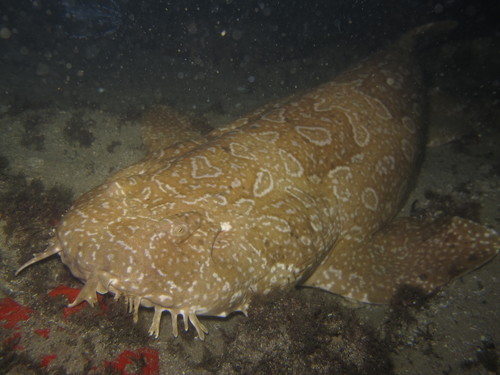
Spotted Wobbegong
Orectolobus maculatus
The Spotted Wobbegong is a living piece of reef art, blending perfectly into the Australian seafloor with its ornate patterns. A master of ambush and night-time stealth, this carpet shark is a fascinating neighbor for those living near the coast.
Quick Identification
Size
Typically 150–180 cm (5–6 ft), though large specimens can reach up to 320 cm (10.5 ft).
Colors
Intricate camouflage pattern of yellow-brown or greenish-brown with distinctive white O-shaped spots and dark saddle markings.
Key Features
- Fringed skin flaps (tassels) around the mouth and snout
- Broad, flattened head and body for bottom-dwelling
- Large, needle-like teeth visible in a wide mouth
- Distinctive O-shaped white spots across the back
When You’ll See Them
Behavior
The Spotted Wobbegong is the ultimate master of disguise, often referred to as a 'carpet shark' due to its flattened appearance and ornate patterns. During the day, it is a lethargic resident of the reef, spending most of its time motionless under rocky ledges or tucked into crevices. Its camouflage is so effective that divers often swim right over them without noticing they are there.
As night falls, the Spotted Wobbegong transforms into a stealthy prowler. It is a solitary hunter, though multiple individuals may share a particularly good resting spot. While generally docile, they are highly territorial during the spring breeding season. They are known for a 'clamp-and-hold' defense mechanism; if stepped on or harassed, they can strike with surprising speed and are reluctant to let go, making them a species to respect from a distance.
EverydayEarth exclusive
Camera Tips
Capturing the Spotted Wobbegong requires a specialized underwater approach. If you have a 'backyard' that meets the ocean, an action camera with a high-quality waterproof housing or a dedicated marine trail cam is essential. Because these sharks are bottom-dwellers, you should mount your camera on a weighted tray or a low-profile tripod specifically designed for the seafloor. Position the lens to look across the top of a reef flat or toward the entrance of a known rocky overhang where they like to rest during the day.
Lighting is the most critical factor for nocturnal marine species. Since Wobbegongs are sensitive to light, avoid using bright white LED bursts which can cause them to flee. Instead, use a red-light filter or a diffused, low-intensity video light to capture their natural behavior. To avoid 'backscatter'—that snowy effect caused by light reflecting off plankton—mount your lights at a 45-degree angle away from the camera lens rather than right next to it.
If you want to ensure a sighting, a scent lure can be incredibly effective. Secure a mesh bait bag filled with oily fish like sardines or chopped squid near the camera site. The scent will travel with the current and may draw a Wobbegong out of its hiding spot to investigate. Ensure the bait is tied down securely so the shark doesn't drag it—and your camera—into a deep crevice.
Pay close attention to the tides when setting your gear. Spotted Wobbegongs often move into shallower reef flats during high tide to forage. Setting your camera during a rising tide in a shallow area (1-3 meters deep) can provide clearer water and better opportunities for the shark to pass through your frame. Finally, check your housing seals meticulously; even a tiny grain of sand can cause a leak under the pressure of a shifting tide.
Similar Species
Species that look similar or are commonly confused with Spotted Wobbegong.
Frequently Asked Questions
Record Spotted Wobbegong at your habitat
Connect a camera to start building your own species record — AI identifies every visitor automatically.