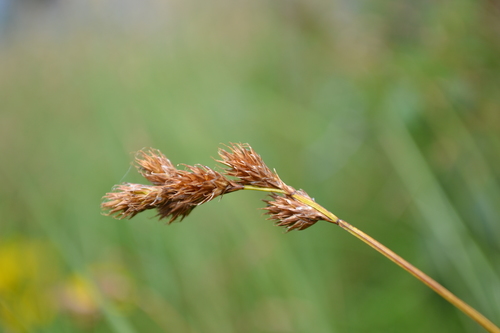
oval sedge
Carex leporina
A resilient, clump-forming sedge known for its distinctive egg-shaped flower clusters and love for damp, sun-drenched meadows.
Quick Identification
Size
Height ranges from 20 to 80 cm (8 to 31 inches); leaves are 2 to 4 mm wide.
Colors
Bright to deep green leaves; flower spikes transition from pale green to golden-brown or reddish-brown with silvery-white tips.
Key Features
- Distinctive oval or egg-shaped flower spikes clustered at the stem tip
- Stiff, sharply triangular stems typical of sedges
- Flower bracts featuring a reddish-brown center and translucent white margins
- Growth habit forms dense, neat tufts rather than spreading aggressively.
When You’ll See Them
Geographic range
Where Does the oval sedge Live?
Native to the temperate regions of Eurasia and North America, the oval sedge is a resilient traveler across the Northern Hemisphere. It is widely distributed across the British Isles and mainland Europe, extending through Russia to East Asia, while in North America, it thrives in damp pockets from the Pacific Northwest across to the Atlantic coast. It is particularly common in areas where the soil remains moist during the spring thaw but may dry out slightly during the peak of summer.
Basemap © OpenStreetMap contributors
Behavior
Oval sedge is a perennial, clump-forming plant that plays a quiet but vital role in its ecosystem. Unlike many grasses that spread via underground runners, this sedge grows in tight, tidy tufts (cespitose growth), making it a well-behaved addition to damp areas of a backyard or meadow. It is wind-pollinated, releasing fine pollen from its spikes in late spring and early summer to be carried to neighboring plants.
In the wild, it serves as a critical structural component of wetland edges. Its dense foliage provides a micro-habitat for various insects and small invertebrates, which in turn attract the birds and amphibians that AI-powered cameras are often set to record. While it doesn't 'behave' in the animal sense, its growth cycle is highly seasonal, with flower heads appearing in May and persisting as dried, seed-bearing structures well into the autumn.
EverydayEarth exclusive
Camera Tips
Capturing the oval sedge on a backyard camera requires a different strategy than filming wildlife. To help your AI camera identify the species accurately, place the unit on a low tripod or ground mount, approximately 12 to 18 inches off the ground. Angle the lens slightly upward to capture the 'inflorescence'—the cluster of oval flower spikes at the top of the stem—against the sky or a neutral background. This contrast makes the specific shape of the egg-like bracts much easier for AI algorithms to recognize.
Because sedges sway in even the slightest breeze, use a camera setting with a high shutter speed or a 'sports' mode if available. This prevents the seed heads from blurring, which is the most common reason for failed plant identifications. If your camera allows for focal adjustments, set it to a macro or close-up range (1-3 feet) and position it near a particularly healthy tuft of the sedge.
Timing is everything for plant photography. The best images are captured during the 'golden hours' of early morning or late afternoon. The low-angle sunlight catches the translucent white margins of the flower bracts, making them glow and highlighting the diagnostic gold centers. Additionally, early morning dew often clings to the spikes, creating high-contrast sparkles that can yield stunning, professional-grade trail cam footage. During the winter, don't move the camera; the dried, brown seed heads remain standing and provide excellent architectural interest and food for visiting winter birds.
Similar Species
Species that look similar or are commonly confused with oval sedge.
Frequently Asked Questions
Record oval sedge at your habitat
Connect a camera to start building your own species record — AI identifies every visitor automatically.