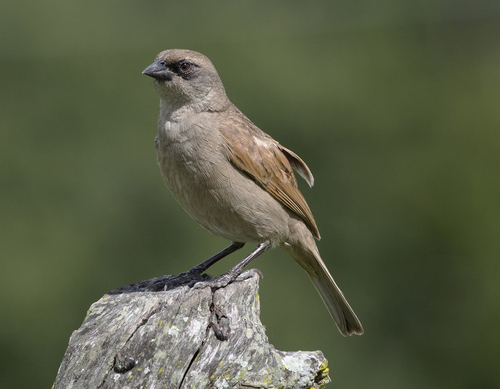
Pale Baywing
Agelaioides fringillarius
A charming resident of Northeastern Brazil’s dry forests, the Pale Baywing stands out with its soft sandy plumage and striking cinnamon wing patches. Unlike its cowbird cousins, this social songbird is a devoted parent, often seen foraging in lively groups across the Caatinga.
Quick Identification
Size
18 cm (7 inches) in length; weighs approximately 40–50g (1.4–1.8 oz)
Colors
Pale sandy-grey or buffy body with distinctive bright rufous (cinnamon) wing patches and a dark tail; bill and legs are black.
Key Features
- Sandy-grey plumage with contrasting cinnamon wing patches
- Strong, conical black bill
- Dark lores creating a subtle mask effect
- Square-tipped tail
When You’ll See Them
Geographic range
Where Does the Pale Baywing Live?
The Pale Baywing is a South American specialist, found exclusively in the northeastern regions of Brazil. Its range is centered within the semi-arid Caatinga biome, stretching across states such as Bahia, Pernambuco, Ceará, and Piauí. While it is a localized endemic, it is quite common within this specific geographic footprint and does not have any introduced populations outside of its native Brazilian home.
Basemap © OpenStreetMap contributors
Behavior
The Pale Baywing is a highly social bird, often found moving in small, noisy flocks or family groups. Unlike many of its relatives in the Icteridae family (the cowbirds), this species is not a brood parasite; instead, it builds its own nests or refurbished abandoned nests from other species, such as the Rufous Hornero. They are dedicated parents and are often observed engaging in mutual preening, which helps maintain social bonds within the group.
In the backyard or garden setting, they are relatively bold and can become accustomed to human presence. They spend a significant portion of their day foraging on the ground or in low-lying shrubbery. Their vocalizations are complex and varied, consisting of a series of metallic chirps and melodious warbles that are frequently heard during the early morning hours.
EverydayEarth exclusive
Camera Tips
To capture the best footage of the Pale Baywing, position your camera at a low angle, roughly 1 to 2 feet off the ground. These birds are frequent ground-foragers, often hopping through leaf litter or sandy patches in search of insects. Aim your lens toward open clearings near thorny scrub or backyard gardens where they feel safe enough to land and explore.
Since the Pale Baywing lives in relatively dry environments, a small birdbath or shallow water feature is the ultimate attractant. Place your camera with a side-view of the water to catch the sunlight reflecting off their rufous wing patches. Early morning, from sunrise until about 9:00 AM, is the golden window for activity, as they are most vocal and active before the midday heat sets in.
Use a 'burst mode' setting or high-frame-rate video to catch their quick, social movements. Because they often travel in pairs or small family groups, a wider-angle lens is better than a tight zoom, ensuring you capture the social interactions that make this species so fascinating. If you are using a trail cam, a fast trigger speed (under 0.5 seconds) is essential for these active fliers.
Similar Species
Species that look similar or are commonly confused with Pale Baywing.
Frequently Asked Questions
Record Pale Baywing at your habitat
Connect a camera to start building your own species record — AI identifies every visitor automatically.