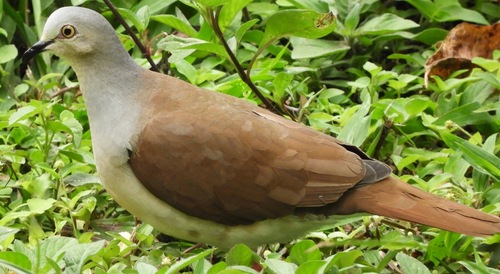
Pallid Dove
Leptotila pallida
A subtle beauty of the South American lowlands, the Pallid Dove is a master of the forest floor. Known for its soft, ghostly appearance and shy nature, this terrestrial dove is a prized find for backyard observers and trail cam enthusiasts in the Tumbesian region.
Quick Identification
Size
23-28 cm (9-11 inches); approximately 140-180 grams
Colors
Pale greyish-white forehead and face, brownish-olive upperparts, vinaceous-pink breast fading to a white belly; legs are bright pinkish-red
Key Features
- Distinctly pale, almost white forehead and face
- Cinnamon-colored underwings visible in flight
- Outer tail feathers tipped with white
- Stocky, ground-dwelling build
- Reddish-pink legs and feet
When You’ll See Them
Geographic range
Where Does the Pallid Dove Live?
Native to South America, the Pallid Dove is a specialist of the humid and semi-humid lowlands along the Pacific coast. Its core range is found throughout western Colombia and western Ecuador, reaching its southern limit in the extreme northwestern corner of Peru. It is a key resident of the Chocó and Tumbesian biomes, favoring the shaded understory of both primary and older secondary forests.
Basemap © OpenStreetMap contributors
Behavior
The Pallid Dove is a primarily terrestrial bird that spends a significant portion of its day walking across the forest floor in search of food. Like many members of the genus Leptotila, it is known for being somewhat secretive and shy, often flushing only when a person or predator gets quite close. When it does take flight, its wings produce a characteristic whirring sound, and it typically flies only a short distance before landing back in dense cover.
Socially, these doves are most often seen alone or in pairs. They are not highly gregarious and do not form large flocks like some other pigeon species. While they are sensitive to habitat disturbance, they can occasionally be found in mature gardens or shaded agricultural areas near forest edges, where they move with a characteristic head-bobbing gait while scanning the leaf litter.
EverydayEarth exclusive
Camera Tips
To capture the Pallid Dove on camera, focus your efforts on the ground. These birds are terrestrial foragers and rarely venture high into the canopy, making them perfect subjects for low-mounted trail cameras. Position your camera approximately 6 to 12 inches off the ground, angled slightly downward toward a clear patch of leaf litter or a natural trail near a water source. Because they are shy, using a camera with a high-speed trigger and a 'quiet' shutter mode is essential to avoid scaring them off before you get a clear shot.
While they aren't typical bird feeder visitors, you can attract them to a specific spot by clearing a small area of debris and lightly scattering cracked corn or small wild bird seeds. They are particularly drawn to areas with dappled sunlight on the forest floor, so try to place your camera where the light is consistent to prevent overexposure from 'hot spots' during the brightest parts of the day. Early morning and late afternoon are the peak activity windows for this species.
Water is a powerful lure for Pallid Doves, especially in drier scrubland areas. A low-profile ground birdbath or even a shallow depression filled with water can become a hotspot for activity. If you are using a camera with video capabilities, set it for short 10-15 second bursts; you might catch their distinctive head-bobbing walk or the quick, jerky movements they make while scanning for predators.
Similar Species
Species that look similar or are commonly confused with Pallid Dove.
Frequently Asked Questions
Record Pallid Dove at your habitat
Connect a camera to start building your own species record — AI identifies every visitor automatically.