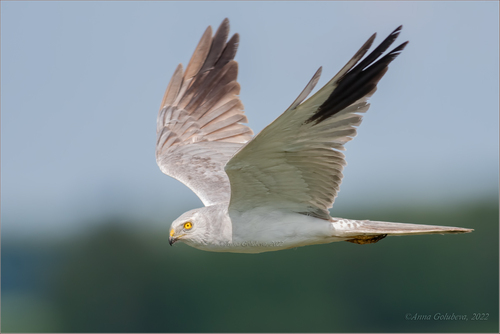
Pallid Harrier
Circus macrourus
The Pallid Harrier is the 'grey ghost' of the grasslands, a sleek and elegant hunter that glides effortlessly over the plains. Whether you are tracking a migrating male or a ring-tailed female, seeing this raptor in action is a true highlight for any wildlife enthusiast.
Quick Identification
Size
Length: 40–50 cm (16–20 in); Wingspan: 95–120 cm (37–47 in); Weight: 250–600g (0.5–1.3 lbs)
Colors
Adult males are pale 'ghostly' grey with narrow black wedges on the wingtips; females and juveniles are streaky brown with a white rump and 'ringed' tail.
Key Features
- Extremely slim wings with four 'fingered' primary feathers
- Pale grey body and white underparts in males
- Distinctive white crescent-like patch under the eye
- Buoyant, low-gliding flight style often just feet above the ground
When You’ll See Them
Behavior
The Pallid Harrier is a graceful, medium-sized raptor known for its 'quartering' flight pattern. It spends much of its day gliding low over open terrain, tilting its wings in a slight V-shape to catch the wind while scanning the grass for movement. Unlike some hawks that hunt from high perches, this species relies on its incredible hearing and low-altitude agility to surprise its prey.
While generally solitary hunters, Pallid Harriers can be seen in small, loose groups during their long-distance migrations between Eurasia and Africa or Southern Asia. In wintering grounds, they may even form communal roosts on the ground in tall grass. They are sensitive to human disturbance during nesting but are otherwise focused entirely on the hunt, often ignoring stationary observers from a distance.
EverydayEarth exclusive
Camera Tips
Capturing a Pallid Harrier on camera requires a strategy focused on their low-altitude hunting habits. Because they 'quarter' over open fields, you should place your camera on the edge of a large meadow or agricultural field, aiming the lens horizontally across the top of the grass. A height of about 3 to 4 feet is ideal, as this aligns with their typical flight path when they are searching for rodents.
Since these birds are highly mobile, a standard motion-trigger camera can be tricky. Use a camera with a lightning-fast trigger speed (0.2 seconds or less) to ensure you don't just capture a blurry tail. If your camera supports 'Burst Mode,' set it to take 3–5 photos per trigger. This increases your chances of getting that perfect 'wings-up' shot or a clear view of the male's distinctive black wing wedges.
While they don't visit traditional bird feeders, you can lure them toward a camera by managing a 'wild patch' of tall grass that attracts their natural prey, like voles. If you have a consistent perch, like a lone fence post in an open field, this is a prime location for a camera. Use a side-angle to capture their profile rather than aiming directly at the sun, as their pale plumage can easily wash out in bright midday light.
For the best results, set your camera to high-definition video (60fps if possible). The way a Pallid Harrier twists and turns in mid-air to pounce on prey is spectacular to watch in slow motion. Focus your efforts on the hours shortly after sunrise or before sunset, when the golden light makes their silvery-grey feathers pop against the landscape.
Similar Species
Species that look similar or are commonly confused with Pallid Harrier.
Frequently Asked Questions
Record Pallid Harrier at your habitat
Connect a camera to start building your own species record — AI identifies every visitor automatically.