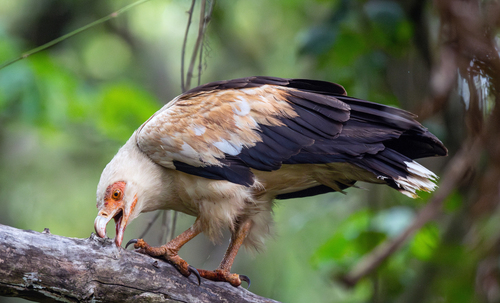
Palm-nut Vulture
Gypohierax angolensis
Meet the raptor that broke the rules. The Palm-nut Vulture is a stunning, white-plumed bird of prey that prefers palm fruit over carrion, making it one of the most unique sightings for any African backyard observer.
Quick Identification
Size
Length: 60 cm (24 in); Wingspan: 150 cm (59 in); Weight: 1.3–1.7 kg (2.9–3.7 lbs)
Colors
Adults are predominantly white with black wing coverts and tail; they are easily identified by a patch of bare, bright red skin around the eyes. Juveniles are a mottled brown.
Key Features
- Bright red patch of bare skin around the eye
- Stark white body plumage with contrasting black wings and tail
- Heavy, hooked yellowish bill
- Broad, rounded wings and a short, square tail
When You’ll See Them
Behavior
While they are technically vultures, they lack the typical 'soaring and searching' behavior of the larger scavengers. Instead, they are more active foragers, often seen walking on the ground or wading in shallow water to supplement their diet with aquatic life. They are relatively bold birds and have adapted well to human-modified landscapes, particularly areas with active palm plantations.
Socially, they are monogamous and tend to stay within a fixed territory throughout the year. They are not particularly vocal, though they may emit a variety of growls and caws during the breeding season or when defending a particularly rich feeding site from other birds.
EverydayEarth exclusive
Camera Tips
To successfully capture the Palm-nut Vulture on your trail camera, you must focus on their primary food source. Unlike other vultures, 'vulture restaurants' with meat carcasses are rarely effective lures for this species. Instead, identify a fruiting Oil Palm (*Elaeis guineensis*) or Raffia Palm on your property. Mounting your camera at a height of 10 to 15 feet (3-4.5 meters) with a downward angle toward a cluster of ripe palm fruit is the single best strategy for high-quality shots.
If you don't have access to high trees, these birds are also known to forage along the edges of water. Placing a camera on a low tripod near the muddy banks of a pond or river—especially where palm trees are nearby—can catch them hunting for crabs or fish. In these situations, ensure your camera has a fast trigger speed (0.3 seconds or less), as their movements while fishing are quick and jerky. Use 'burst mode' to take 3-5 photos per trigger to increase your chances of getting a clear shot of their striking red facial skin.
Regarding timing, these birds are strictly diurnal. They rely on the morning warmth to become active but are most likely to feed at your camera site during the mid-morning once they have finished their first soaring flight of the day. If you are using a camera with video capabilities, set it to record 10-20 second clips. Watching a Palm-nut Vulture use its beak and feet to expertly husk a palm nut is a unique behavioral record that standard photos can't fully capture.
Lastly, pay attention to the seasons. While they are present year-round, they are most active near specific trees when the fruit is at its peak ripeness. If you notice a high amount of fallen palm husks on the ground, that is your signal to move your camera to that location immediately. Keep the lens clean of the sticky palm oils that can sometimes accumulate if the camera is placed too close to the feeding site.
Similar Species
Species that look similar or are commonly confused with Palm-nut Vulture.
Frequently Asked Questions
Record Palm-nut Vulture at your habitat
Connect a camera to start building your own species record — AI identifies every visitor automatically.