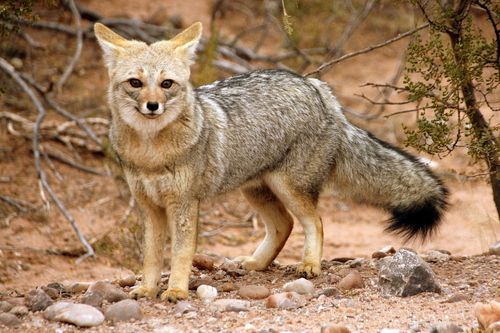
Pampas Fox
Lycalopex gymnocerca
Meet the clever 'zorro' of the South American plains. The Pampas fox is a resilient survivor known for its striking agouti coat and curious, opportunistic personality.
Quick Identification
Size
Body length of 51–74 cm (20–29 in) and weight of 4–6 kg (9–13 lbs)
Colors
Agouti-grey coat with a reddish-yellow tint on the head and legs; white or pale grey underparts; distinct black markings on the muzzle and tail tip.
Key Features
- Bushy tail with a prominent black tip and a dark patch at the base
- Reddish-tan coloring on the back of the ears and lower limbs
- Pointed muzzle with dark 'mustache' markings on the sides
- Relatively large, upright ears for keen hearing
When You’ll See Them
Behavior
The Pampas fox, or 'zorro,' is a highly adaptable and opportunistic member of the South American canid family. While they are primarily solitary animals, they occasionally form monogamous pairs to raise offspring during the spring months. They are remarkably resilient to human presence and are often seen navigating the fringes of agricultural lands and suburban developments, where they search for easy meals.
One of the most fascinating behaviors of the Pampas fox is its tendency to 'play dead' when surprised or threatened. If a human or large predator approaches suddenly, the fox may go limp and remain motionless until the danger passes. They are also known for their hoarding behavior, often burying surplus food in shallow caches to be consumed later, which helps them survive during periods when prey is scarce.
EverydayEarth exclusive
Camera Tips
To capture high-quality footage of a Pampas fox, position your camera along 'transition zones'—the areas where open grassland meets denser shrubs or fencelines. These foxes are creatures of habit and will often use the same dirt tracks or gaps under fences every night. Mounting your camera at a low height of 12 to 18 inches (30–45 cm) is ideal, as it aligns with their eye level and captures the identifying markings on their muzzle and legs.
Because they are extremely curious, you can often lure them into the frame using scent rather than food. A small amount of fatty acid tablet or even a rag soaked in a bit of fish oil tucked into a hollow log can pique their interest. This encourages them to stop and sniff, providing you with a still, clear image rather than a blurry 'motion' shot of them trotting past. Ensure your camera is set to a multi-shot burst or a short video mode (15-20 seconds) to witness their inquisitive sniffing behavior.
During the spring and early summer (September to December in their native range), keep a close eye on your camera if you notice a fox carrying prey. This is a sign that a den is nearby. If you are lucky enough to have a den on your property, place the camera at least 15-20 feet away to avoid disturbing the family. Use 'No-Glow' infrared flash settings, as these foxes have sensitive night vision and can be startled by the faint red glow of standard LEDs, which might cause them to avoid the area in the future.
Similar Species
Species that look similar or are commonly confused with Pampas Fox.
Frequently Asked Questions
Record Pampas Fox at your habitat
Connect a camera to start building your own species record — AI identifies every visitor automatically.