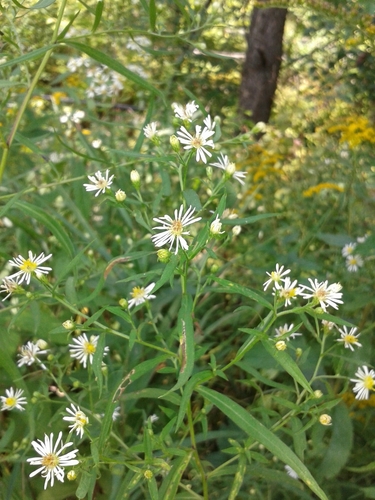
panicled aster
Symphyotrichum lanceolatum
A towering late-season beauty, the panicled aster lights up autumn landscapes with a sea of white blossoms. This resilient native plant is a favorite for migrating butterflies and a striking addition to any wild backyard.
Quick Identification
Size
Stands 0.5–2 meters (1.5–6.5 feet) tall; flower heads are approximately 1–2 cm (0.4–0.8 inches) wide.
Colors
Bright white ray florets (sometimes tinged pink/pale purple) with central disks that transition from yellow to deep purple or brown.
Key Features
- Profuse clusters of white flowers in branching panicles
- Smooth, lance-shaped leaves with minimal to no hairs
- Flower centers that change from yellow to purple as they age
- Impressive height often reaching 5-6 feet in moist soil
When You’ll See Them
Behavior
The panicled aster is a vigorous, colony-forming perennial that spreads through an extensive underground rhizome system. Unlike some more delicate garden flowers, this species is a competitive grower, often forming dense stands in meadows and along forest edges. It is a late-season powerhouse, blooming from July through October when many other nectar sources have faded, making it a critical resource for late-summer pollinators.
In the backyard ecosystem, panicled aster acts as a bustling hub of activity. It doesn't just sit there; it interacts with its environment by providing structural cover for small mammals and a high-volume nectar buffet for insects. While it can be aggressive in small garden beds, its ability to stand tall through early frosts makes it a resilient and visually striking member of the autumn landscape.
EverydayEarth exclusive
Camera Tips
To capture the panicled aster effectively on a backyard camera, placement is everything. Because these plants can grow quite tall—often reaching over five feet—you should mount your camera on a sturdy stake or a nearby fence post at roughly chest height. This allows you to look directly into the branching panicles where the floral action happens. If you are using an AI camera designed for insects or birds, position it within 12 to 24 inches of a dense flower cluster to trigger on the various bees, wasps, and butterflies that frequent the white blooms from late summer through frost.
Lighting can be a challenge with white flowers, as they tend to 'blow out' or lose detail in direct midday sun. To get the best color and detail in your captures, try to position your camera so the flowers are backlit during the 'golden hours' of early morning or late afternoon. This makes the white petals glow and highlights the purple and yellow centers. If your camera allows for exposure adjustments, slightly underexposing the image can help preserve the delicate textures of the ray florets against the green foliage.
One unique way to use the panicled aster with a trail camera is as a 'natural backdrop' for larger wildlife. Because these asters often grow in dense thickets at the edge of woods or meadows, they create a beautiful, textured wall that hides the background and makes deer, foxes, or rabbits pop in the frame. Set your camera 10-15 feet back from the stand of asters to capture mammals moving along the 'edge habitat' where these plants thrive. Be sure to clear any tall grass directly in front of the lens to prevent false triggers on windy days, as the light stems of the aster can sway significantly.
Finally, consider a time-lapse setting if your camera supports it. Watching a panicled aster stand grow from a leafy green stalk in July to a white explosion of flowers in September is a fascinating way to document the changing seasons in your backyard. Ensure your camera is securely mounted for long-term placement to avoid shifting during the weeks-long blooming period.
Similar Species
Species that look similar or are commonly confused with panicled aster.
Frequently Asked Questions
Record panicled aster at your habitat
Connect a camera to start building your own species record — AI identifies every visitor automatically.