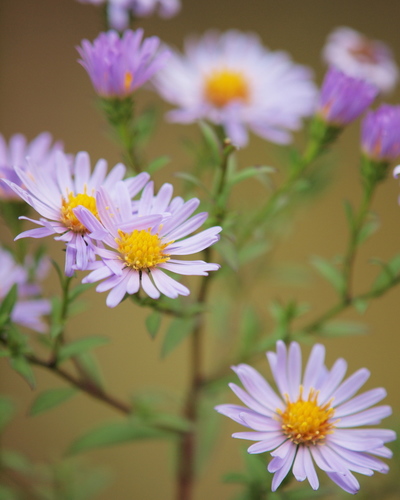
New York aster
Symphyotrichum novi-belgii
A vibrant late-season masterpiece, the New York aster paints the autumn landscape in shades of deep violet and gold. It serves as a critical nectar hub for migrating butterflies and a stunning focal point for any backyard nature photographer.
Quick Identification
Size
Height of 30–120 cm (1–4 feet); flower heads approximately 2.5–5 cm (1–2 inches) wide
Colors
Bright violet, lavender, or purple rays with yellow centers that transition to reddish-brown
Key Features
- Smooth, hairless stems and lance-shaped leaves
- Dense, branched clusters of daisy-like flowers
- Central yellow discs that darken as they age
- Late-season bloom time typically peaking in September
When You’ll See Them
Behavior
The New York aster is a resilient perennial that brings a dramatic burst of color to the autumn landscape just as other plants begin to go dormant. It is a clump-forming species that spreads through underground rhizomes, often creating dense thickets of purple blooms that act as a beacon for late-season pollinators. Because it blooms around late September, it has earned the nickname 'Michaelmas daisy' in many regions.
This plant plays a vital role in the ecosystem by serving as a primary fuel station for migrating Monarch butterflies and native bees. It is a social plant in the sense that it supports a high volume of biodiversity, often covered in several different species of insects simultaneously. In a backyard setting, it is known for its ability to withstand the first few touches of frost, maintaining its vibrant appearance well into October.
EverydayEarth exclusive
Camera Tips
Capturing the New York aster on camera is less about the plant itself and more about the incredible wildlife it attracts. To get the best results, mount your camera on a short tripod or garden stake at 'flower height'—usually 2 to 3 feet off the ground. Aim your lens at a particularly dense cluster of blooms. This 'shotgun' approach increases your chances of capturing a pollinator landing, as insects are more likely to visit a target-rich environment with multiple nectar sources in one spot.
Lighting is your best friend when photographing these deep purple petals. The 'golden hour'—the hour after sunrise or before sunset—will make the violet hues pop and soften the contrast on the yellow central discs. If your camera allows for manual settings, use a fast shutter speed (1/500s or higher) to freeze the motion of the stems in the wind and the rapid wingbeats of visiting hoverflies or bees. For those using AI-powered trail cameras, ensure the sensitivity is set to high, as the movement of a butterfly can sometimes be too subtle for standard motion sensors.
Consider setting up a time-lapse during a clear September day. A photo taken every 60 seconds from dawn to dusk can reveal the fascinating way the flower heads track the sun and the sheer volume of insect traffic a single plant receives. If you are specifically looking to capture the iconic Monarch butterfly, keep your camera active during warm, sunny afternoons when the temperature is above 60°F, as this is when they are most active during their southern migration. Avoid using a flash if possible, as it can wash out the delicate textures of the petals and startle larger visitors like hummingbirds.
Similar Species
Species that look similar or are commonly confused with New York aster.
Frequently Asked Questions
Record New York aster at your habitat
Connect a camera to start building your own species record — AI identifies every visitor automatically.