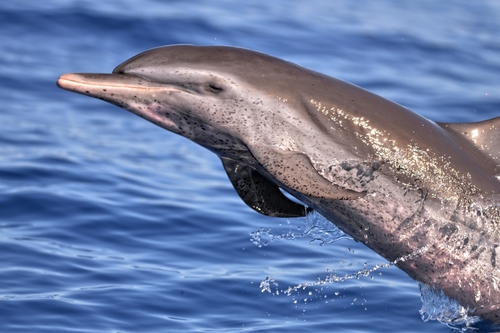
Pantropical Spotted Dolphin
Stenella attenuata
The ultimate acrobat of the tropical seas, the Pantropical Spotted Dolphin is famous for its intricate patterns and high-speed energy. Once a symbol of marine conservation, these intelligent pod-dwellers now thrive as one of the most abundant dolphins in our oceans.
Quick Identification
Size
Adults range from 1.6 to 2.6 meters (5.2 to 8.5 feet) in length and weigh between 90 and 120 kg (200 to 260 lbs).
Colors
Features a dark gray 'cape' on the back, lighter gray flanks, and a white belly. Adults are covered in contrasting spots—white spots on the dark areas and dark spots on the lighter areas.
Key Features
- Slender beak with a distinct white tip
- Dense spotting that increases with age
- Large, falcate (curved) dorsal fin
- Athletic, streamlined body built for speed
When You’ll See Them
Behavior
The Pantropical Spotted Dolphin is one of the most gregarious and active species in the ocean. They are highly social mammals, typically traveling in groups called pods that can range from a dozen individuals to several hundred. In the eastern Pacific, they are famous for forming massive 'super-pods' and often associate with yellowfin tuna and other dolphin species like the Spinner Dolphin. This social nature extends to their interactions with humans; they are frequent bow-riders, often racing to the front of moving vessels to ride the pressure wave created by the hull.
These dolphins are incredible acrobats, frequently leaping high out of the water and performing long, low 'porpoising' jumps when traveling at high speeds. While they are active throughout the day, their social structure is complex, involving intricate vocalizations and physical contact to maintain pod bonds. They are generally not aggressive toward humans but maintain a healthy distance unless they choose to initiate an interaction with a boat.
EverydayEarth exclusive
Camera Tips
Capturing the Pantropical Spotted Dolphin requires a different approach than typical backyard wildlife. If you live on a coastal property or spend time on the water, your best bet is a high-speed action camera or a trail camera mounted to a dock or piling facing the open water. Because these dolphins move at speeds up to 20 knots, your camera's shutter speed or frame rate is the most critical setting. Set your equipment to capture at least 60 frames per second (FPS) to avoid motion blur during their frequent leaps.
For those using stationary cameras on piers or boat sterns, use a polarized filter. This is a game-changer for marine photography as it cuts through the surface glare and reflections, allowing the AI to better recognize the dolphin's spotting patterns and white-tipped beak beneath the water's surface. Angle the camera at roughly 30 to 45 degrees downward toward the water to capture both surface breaches and shallow-swimming behavior.
Since these dolphins are attracted to the wake of boats, many enthusiasts use 'tow-cams' or waterproof housings mounted just below the waterline. If you are using an AI-triggered system, ensure the motion sensitivity is set to high, as the contrast between the dolphin's gray body and the blue water can be subtle in low-light conditions. Early morning and late afternoon provide the best 'golden hour' lighting, which highlights the texture of their spots and makes identification significantly easier for both humans and AI software.
Avoid using artificial baits or chum, as these dolphins are hunters of live, fast-moving schools. Instead, look for natural 'lures' such as diving seabirds or surface-skipping flying fish, which often indicate that a pod is nearby and active. During the summer months, when water temperatures peak, they tend to be more active near the surface, providing the best opportunities for clear, high-resolution captures.
Similar Species
Species that look similar or are commonly confused with Pantropical Spotted Dolphin.
Atlantic Spotted Dolphin
Very similar in appearance but generally have a more robust body and are only found in the Atlantic Ocean.
Spinner Dolphin
Lacks the heavy spotting of adults and is characterized by its long, thin beak and famous vertical spinning leaps.
Common Bottlenose Dolphin
Much larger and heavier with a uniform gray color and no spots on the body or white tip on the beak.
Frequently Asked Questions
Record Pantropical Spotted Dolphin at your habitat
Connect a camera to start building your own species record — AI identifies every visitor automatically.