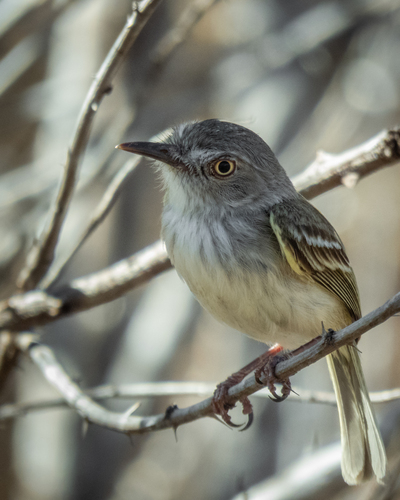
Pearly-vented Tody-Tyrant
Hemitriccus margaritaceiventer
A hidden gem of South American gardens, the Pearly-vented Tody-Tyrant is a tiny, energetic flycatcher known for its pearlescent belly and striking pale eyes. Spotting one is a testament to a healthy, biodiverse backyard.
Quick Identification
Size
Length: 10 cm (4 in); Weight: 7–9 g (0.25–0.32 oz); Wingspan: ~14–16 cm (5.5–6.3 in)
Colors
Olive-grey upperparts, pearly-white underparts with light grey streaking on the breast, and a distinct pale yellow iris.
Key Features
- Pale yellowish-white iris contrast with dark head
- Dull olive-grey upperparts with whitish underparts
- Streaked throat and upper breast
- Tiny, compact body with a relatively long bill
- Two thin yellowish wing bars
When You’ll See Them
Behavior
The Pearly-vented Tody-Tyrant is a spirited little bird that spends much of its time navigating the dense mid-story of dry forests and suburban thickets. Unlike many larger flycatchers that sit on exposed branches, this species prefers the "inside" of bushes, making it a rewarding challenge for backyard observers. It is often seen in pairs, moving with quick, jerky flights as it searches for food.
Socially, they are territorial during the breeding season but generally tolerate human presence if there is plenty of cover available. They have a characteristic habit of flicking their wings and tail while foraging, a behavior that often reveals their presence even before they vocalize. Their song is a series of sharp, rhythmic notes that can be heard throughout the day, though they are most vocal in the early morning.
EverydayEarth exclusive
Camera Tips
Capturing the Pearly-vented Tody-Tyrant requires a strategic approach because of their preference for dense foliage. Position your AI camera at eye level (about 4-5 feet off the ground) near a "transition zone"—where a manicured lawn meets a thick hedge or shrubbery. Because they are tiny, a camera with a high-resolution sensor and a fast trigger speed is essential to catch their quick movements before they hop back into the shadows.
To lure them into the camera's field of view, focus on the architecture of your garden rather than traditional feeders. These birds do not eat seeds, but they are highly attracted to water. A shallow, trickling birdbath placed near cover is your best bet for a clear shot. Set the camera to a "burst mode" if possible, as their rapid wing-flicks and jerky head movements can cause motion blur in single-shot settings. Ensure the background isn't too cluttered so the AI can easily differentiate the bird's olive-grey profile from the leaves.
Lighting is crucial for this species to highlight the "pearly" sheen of their belly and their distinctive yellow eyes. Aim for a spot that receives dappled morning light. If using a trail cam, use the "High" sensitivity setting for PIR sensors, as a 7-gram bird may not trigger lower sensitivity settings. Avoid using heavy infrared flashes at night; while they are diurnal, a bright flash at dawn can sometimes startle them away from their favorite foraging spots.
Finally, consider the seasonality of their behavior. During the breeding season, they become more active in specific territories. If you see a pair consistently in one area of your yard, that is the perfect place to mount a permanent camera bracket. Patience is key—once they feel safe in a specific thicket, they will return to the same perches daily, allowing you to capture high-quality footage of their unique fly-catching maneuvers.
Similar Species
Species that look similar or are commonly confused with Pearly-vented Tody-Tyrant.
Frequently Asked Questions
Record Pearly-vented Tody-Tyrant at your habitat
Connect a camera to start building your own species record — AI identifies every visitor automatically.