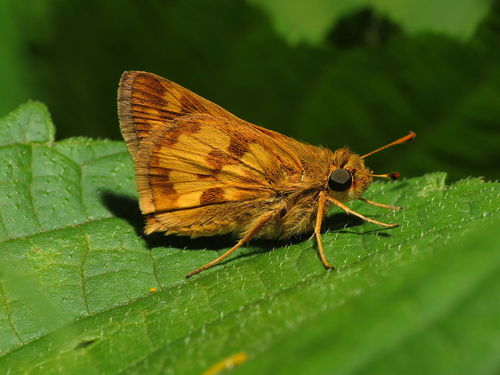
Peck's Skipper
Polites peckius
Meet the 'fighter jet' of the butterfly world. The Peck's Skipper is a pint-sized powerhouse of the backyard, easily recognized by its golden-patched wings and high-speed aerial maneuvers.
Quick Identification
Size
Wingspan of 19–27 mm (0.75–1.1 inches); body length approximately 12–15 mm
Colors
Upper wings are dark brown with orange-yellow patches; underside of hindwing features a highly distinctive, large, jagged yellow patch surrounded by dark borders.
Key Features
- Large, irregular yellow-orange patch on the underside of the hindwing
- Hooked 'club' antennae typical of skippers
- Male has a thick, black dash (stigma) on the upper forewing
- Distinctive 'jet-plane' resting posture with offset wing angles
When You’ll See Them
Behavior
Socially, males are known for their territorial 'perching' behavior. A male will find a prominent blade of grass or a flower head and wait for females to pass by. If another male enters his air space, he will aggressively spiral upward to chase the intruder away. For homeowners, these butterflies are peaceful residents that indicate a healthy, pesticide-free lawn and garden environment.
EverydayEarth exclusive
Camera Tips
Lighting is the most critical factor for this species. Peck's Skippers are 'solar-powered' and will be most active and stationary when the sun is hitting your garden directly. Position your camera so the sun is behind it or to the side to highlight the golden patches on their wings. If your camera has a 'high sensitivity' or 'small subject' AI mode, enable it; their rapid wing movements can sometimes be missed by standard motion sensors designed for larger mammals.
If you want to 'lure' them into the frame, try the 'puddling' method. Create a small patch of damp, mineral-rich mud or place a flat, dark stone in a sunny spot near your camera. Skippers often land on these to regulate their body temperature or sip essential salts. By providing a stable landing pad, you increase the chances of the AI triggering a high-quality, still image rather than a blurred fly-by. Peak activity usually occurs in two 'bursts' during the summer—once in late spring and again in mid-August—so keep your batteries charged during these windows.
Similar Species
Species that look similar or are commonly confused with Peck's Skipper.
Frequently Asked Questions
Record Peck's Skipper at your habitat
Connect a camera to start building your own species record — AI identifies every visitor automatically.