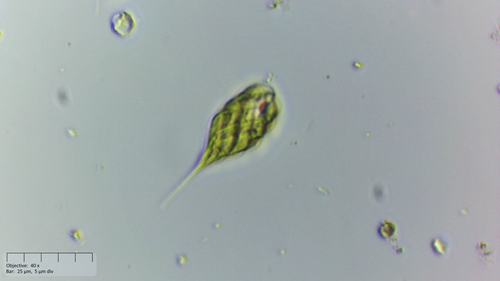
Phacus pyrum
Monomorphina pyrum
The emerald jewel of the microscopic world, Phacus pyrum is a pear-shaped wonder found in nearly every backyard pond. With its rigid spiral shell and graceful spinning motion, it offers a mesmerizing glimpse into the hidden life within a single drop of water.
Quick Identification
Size
30 to 55 micrometers (0.0011 to 0.0021 inches) in length; microscopic and invisible to the naked eye.
Colors
Brilliant emerald green body with a translucent outer shell; features a tiny, distinct bright red eyespot (stigma) at the anterior end.
Key Features
- Distinctive pear-shaped or teardrop body with a sharply pointed tail
- Rigid outer membrane with noticeable spiral ridges or striations
- Single long, whip-like flagellum used for a spinning swimming motion
When You’ll See Them
Behavior
Phacus pyrum, often referred to as the pear-shaped euglenid, is a fascinating microscopic organism that acts much like a plant-animal hybrid. Unlike many of its relatives, it possesses a rigid protein-based shell called a pellicle, which means it maintains its pear-like shape constantly rather than squishing and stretching as it moves. It navigates its aquatic world using a single flagellum, which it lashes to create a unique gyrating or corkscrew-like swimming pattern.
These organisms are highly responsive to their environment through a process called phototaxis. Using a light-sensitive red eyespot, Phacus pyrum can detect the direction and intensity of sunlight, allowing it to swim toward the surface of backyard ponds to maximize its energy intake. While they are generally solitary, they can be found in high concentrations in water that is rich in organic nutrients, often coexisting peacefully with other micro-fauna like rotifers and ciliates.
EverydayEarth exclusive
Camera Tips
Capturing Phacus pyrum requires specialized equipment, as these organisms are invisible to traditional trail cameras. To discover them in your backyard, use the EverydayEarth 'Micro-Explorer' kit or a digital microscope adapter for your smartphone. The best samples are found by skimming the surface film of a still pond or birdbath on a sunny day. Collect about 10ml of water in a clear vial, focusing on areas near submerged plants where these organisms like to congregate.
For the highest quality AI detection, place a single drop of your sample onto a concave glass slide. Setting your magnification to 400x is the sweet spot for seeing the pear-shaped silhouette and the spiral ridges that define this species. Because Phacus pyrum is attracted to light, you can actually 'bait' them in front of the lens by using a small, directional LED light. They will naturally swim toward the light source, allowing you to capture a high density of subjects in a single frame.
Lighting is the most critical factor for a clear 'shot.' Use bright-field illumination, but try slightly offsetting your light source to create a 'diagonal' lighting effect; this highlights the spiral striations on the body, which helps the AI differentiate Phacus pyrum from other green microbes. Since these organisms move in a spinning motion, use a high frame rate setting on your camera to prevent motion blur and capture the delicate whip-like motion of the flagellum.
Seasonally, you will find the most activity during the warmer months when nutrient levels in the water are higher. However, you can find them year-round even under ice. If you are sampling in winter, allow your water sample to reach room temperature before filming, as this will 'wake up' the organisms and encourage the active swimming behavior that makes for the best video captures.
Similar Species
Species that look similar or are commonly confused with Phacus pyrum.
Frequently Asked Questions
Record Phacus pyrum at your habitat
Connect a camera to start building your own species record — AI identifies every visitor automatically.