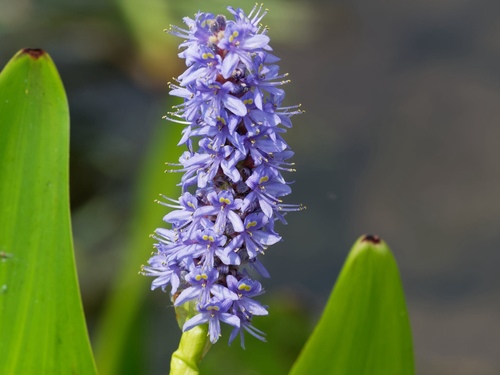
pickerelweed
Pontederia cordata
A vibrant sentinel of the shoreline, Pickerelweed paints the water's edge with spikes of brilliant violet. This essential wetland plant serves as a bustling airport for pollinators and a hidden sanctuary for aquatic life.
Quick Identification
Size
2-4 feet (0.6-1.2 meters) in height; 1-3 feet (0.3-0.9 meters) in spread
Colors
Deep violet-blue or lavender flowers (occasionally white); glossy bright green foliage
Key Features
- Spike of densely clustered violet-blue flowers
- Large, glossy heart-shaped or lance-shaped leaves
- Two yellow nectar spots on the central upper petal
- Emergent growth habit rising from shallow water
When You’ll See Them
Behavior
Pickerelweed is a robust, colony-forming perennial that acts as a cornerstone of the wetland ecosystem. While it doesn't 'behave' in the animal sense, its growth cycle is a rhythmic response to the seasons. In late spring, it emerges from the submerged muck, sending up thick, succulent stems that can withstand the ebb and flow of tides and currents. By mid-summer, it produces iconic blue flower spikes that bloom sequentially from bottom to top, ensuring a long period of availability for the creatures that depend on it.
As a 'social' plant, Pickerelweed creates a complex physical architecture that benefits dozens of other species. Its submerged stems and roots provide a protected nursery for fish fry and tadpoles, while the broad leaves offer shade and a place for dragonflies to transition from their aquatic larval stage to adulthood. By late autumn, the plant dies back to its rhizomes, but its nutrient-rich seeds remain, providing a vital winter food source for various species of waterfowl.
EverydayEarth exclusive
Camera Tips
Capturing high-quality footage of pickerelweed requires a strategy that treats the plant as a stage for wildlife drama. Position your AI-powered camera on a stable tripod or a dock piling at a 'frog's-eye view'—roughly 2 feet above the water line. This angle allows you to capture the vibrant blue flower spikes against the horizon while also monitoring the water surface below the leaves. Because these plants grow in muddy environments, ensure your camera mount is secure to prevent tilting as the ground settles.
To get the best results from your AI triggers, focus on a single, healthy cluster of blooms. These flowers are magnets for swallowtail butterflies, bumblebees, and specialized pickerelweed bees. If your camera settings allow, use a fast shutter speed (at least 1/500s) to freeze the rapid wingbeats of pollinators. If you are aiming for larger subjects, like Great Blue Herons or ducks that forage among the stems, set your detection zone to include the water's edge at the base of the plant.
One of the biggest challenges with aquatic plants is wind. Pickerelweed stems are flexible and will sway, which can trigger hundreds of 'false positive' recordings. To avoid this, use a camera with 'Activity Zones' and exclude the top of the foliage, or lower the motion sensitivity slightly. Lighting is best during the 'golden hours' of early morning or late afternoon; the waxy texture of the leaves can cause harsh glare in the midday sun, which often confuses AI color-recognition sensors. For a truly unique shot, try a time-lapse during a sunny morning to watch the individual florets unfurl as the temperature rises.
Similar Species
Species that look similar or are commonly confused with pickerelweed.
Frequently Asked Questions
Record pickerelweed at your habitat
Connect a camera to start building your own species record — AI identifies every visitor automatically.