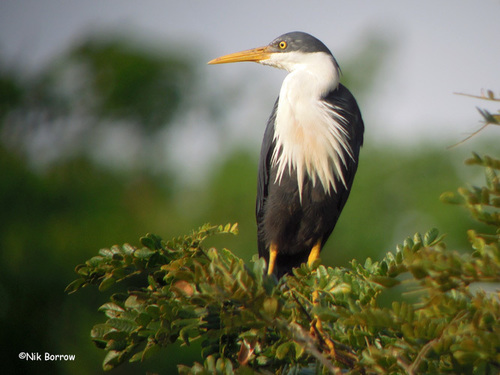
Pied Heron
Egretta picata
Elegant and dapper, the Pied Heron is the 'black-tie' guest of the northern Australian wetlands. With its striking slate-and-white plumage and graceful gait, it is a master of the shallow-water hunt.
Quick Identification
Size
Length: 43–55 cm (17–22 in); Wingspan: 65–75 cm (26–30 in); Weight: 250–280 g (8.8–9.9 oz)
Colors
Adults have a dark slate-grey to black body, wings, and 'cap', contrasting sharply with a white throat and neck. They feature a yellow bill and dull yellow or greenish legs. Juveniles lack the dark cap and crest.
Key Features
- Striking white neck contrasting with dark charcoal body
- Slender yellow bill and greenish-yellow legs
- Black crest of feathers on the head (adults)
- Smaller and more delicate than the similar White-necked Heron
When You’ll See Them
Behavior
The Pied Heron is a highly social and active bird, often seen in small groups or large flocks, particularly when congregating around receding water bodies. Unlike some of its more solitary heron cousins, the Pied Heron is quite gregarious and can frequently be found feeding alongside other waterbirds like ibises and egrets. They are known for their elegant, light-footed movement as they stalk prey through shallow water or damp grasslands.
While they are generally wary of direct human contact, they have adapted well to modified landscapes such as cattle tanks, sewage ponds, and large suburban drainage basins in northern Australia. They are not particularly vocal birds, usually remaining silent except for occasional croaks when disturbed or during the breeding season. Their flight is graceful, characterized by slow, rhythmic wingbeats and the typical heron-like tucked-back neck.
EverydayEarth exclusive
Camera Tips
To capture the best footage of a Pied Heron, camera placement is everything. These birds are most active at the water's edge, so position your camera approximately 12 to 18 inches off the ground, angled slightly upward. This 'frog's eye view' creates a professional, intimate perspective and ensures you capture the bird's striking yellow bill and white neck in high detail. Avoid placing the camera too high, as looking down on the bird often loses the impact of its unique tuxedo-like plumage.
Focus your camera on the transition zones between water and land. Pied Herons love 'edge' habitats—shallow mudflats or the very edge of a garden pond where insects are plentiful. If you are using a trail camera in a backyard setting, a small, shallow water feature or a solar-powered dripper can act as a powerful lure. The sound of moving water is often more effective than food at drawing them into the camera's frame.
Because Pied Herons are relatively small and quick when striking at prey, set your camera to a high trigger speed or 'burst mode' if available. If your camera supports video, 60fps (frames per second) is ideal to capture the fluid motion of their neck during a strike. Lighting is also crucial; the dark feathers can easily lose detail in harsh midday sun, so aim for locations that receive good morning light or use a camera with high dynamic range (HDR) capabilities to balance the bright white neck and the dark grey body.
In terms of timing, these birds are most predictable during the early morning hours just after sunrise. If you live in a monsoonal climate, pay extra attention during the transition from the dry to the wet season. As small water holes evaporate, Pied Herons concentrate in higher numbers, providing a fantastic opportunity to capture social interactions on camera. Ensure your camera is well-camouflaged with local vegetation, as they have excellent eyesight and may avoid a shiny plastic box appearing suddenly in their environment.
Similar Species
Species that look similar or are commonly confused with Pied Heron.
Frequently Asked Questions
Record Pied Heron at your habitat
Connect a camera to start building your own species record — AI identifies every visitor automatically.