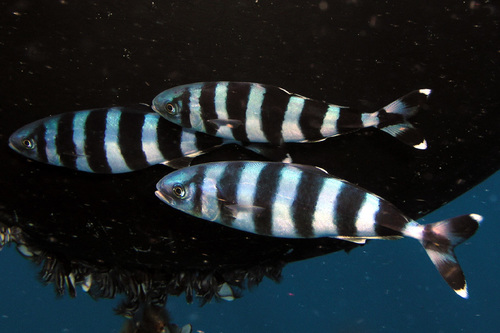
Pilotfish
Naucrates ductor
The zebra-striped navigator of the deep blue. Famous for its fearless companionship with apex predators, the Pilotfish is a master of the open ocean.
Quick Identification
Size
Typically 30–60 cm (12–24 inches) in length; maximum recorded size is 70 cm (28 inches). Weight ranges from 0.5 to 1.5 kg (1 to 3.3 lbs).
Colors
Brilliant silvery-blue to grey base with 5–7 prominent dark navy or black vertical bands; tail fins often feature distinct white tips.
Key Features
- 5–7 dark vertical bands across the body
- Slender, cigar-shaped profile
- Forked tail with white-tipped lobes
- Commonly found swimming in the pressure wave of sharks or ships
When You’ll See Them
Behavior
The pilotfish is renowned for its fascinating commensal relationship with larger marine animals, most notably sharks, rays, and sea turtles. While ancient mariners once believed these fish acted as guides for sharks—leading them to prey—modern science shows they actually follow their hosts to take advantage of the protection provided by a large predator and to scavenge on leftover food scraps. They are incredibly agile and possess the stamina to maintain high speeds alongside their hosts for long periods.
Socially, pilotfish are often seen in small groups of two to a dozen individuals surrounding a single host. They are not parasitic; unlike remoras, they do not attach themselves to the host. Instead, they swim in the boundary layer of water moving with the shark, which allows them to conserve energy. While they are generally indifferent to humans, they are known to be quite curious and will occasionally approach divers or offshore cameras to investigate.
EverydayEarth exclusive
Camera Tips
Capturing the pilotfish on camera requires a shift from traditional land-based trail cams to specialized underwater equipment. Because these are pelagic fish, your "backyard" for this species is the open ocean or deep coastal waters. For the best results, use an action camera with high-quality underwater housing. Mounting your camera to a weighted drop-rig or a submerged buoy line (FAD - Fish Aggregating Device) is the most effective way to intercept them. Pilotfish are naturally attracted to floating objects, so a camera positioned 5–10 feet below a drifting buoy or a patch of sargassum weed is a prime location.
Technical settings are crucial due to the high-speed movement of both the pilotfish and their hosts. Set your camera to a minimum of 60 frames per second (fps) at 4K resolution to capture the fluid motion and the sharp contrast of their bands without motion blur. Because the ocean absorbs red light, use a red filter or adjust your white balance to "underwater" mode to ensure the silvery-blue hue of the fish looks natural. High dynamic range (HDR) settings are particularly helpful, as pilotfish often dart between the deep shadows of a shark and the bright, shimmering light of the surface.
To attract pilotfish into your camera's field of view without a host animal present, you can use a small mesh chum bag filled with oily fish like sardines or mackerel. However, the most iconic shots are of the fish in their natural association. If you are using a tethered camera from a boat, try to position the lens so it faces slightly upward toward the surface; this uses the sun to create a high-contrast silhouette that emphasizes their vertical banding. Be prepared for a "wait and see" approach—pilotfish are transients, and while they may stay with a host for days, they can disappear into the blue in an instant if a ship or a larger predator moves out of range.
Similar Species
Species that look similar or are commonly confused with Pilotfish.
Frequently Asked Questions
Record Pilotfish at your habitat
Connect a camera to start building your own species record — AI identifies every visitor automatically.