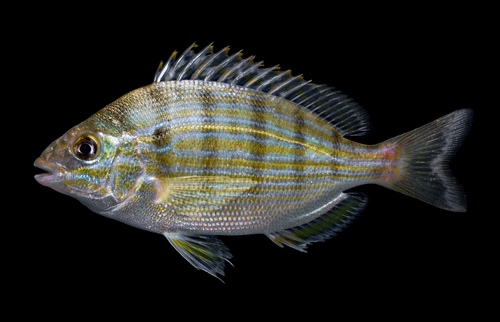
Pinfish
Lagodon rhomboides
The spunky and colorful Pinfish is a coastal backyard favorite, easily identified by its shimmering stripes and a signature black 'shoulder' spot.
Quick Identification
Size
4-8 inches (10-20 cm) in length, rarely exceeding 10 inches (25 cm); weights usually under 1 lb (0.45 kg).
Colors
Silvery body with iridescent yellow and blue horizontal stripes; 4-6 faint dark vertical bars and a distinct black spot behind the gill cover.
Key Features
- Distinct black spot near the shoulder
- Sharp, needle-like dorsal spines
- Small mouth with incisor-like teeth
- Oval, laterally compressed body shape
When You’ll See Them
Behavior
Pinfish are highly energetic and social fish, typically found schooling in shallow coastal waters. They are known for their bold and inquisitive nature, often being the first species to investigate any disturbance or potential food source in their environment. This confidence makes them frequent stars on underwater backyard cameras located near docks or canals.
The species is famous for its defensive adaptations, specifically the sharp spines on its dorsal fin that give the 'Pin' fish its name. These spines are an effective deterrent against larger predators like Snook or Herons. While they are small, they are surprisingly aggressive feeders and are often nicknamed 'bait stealers' by coastal residents because of their ability to quickly nibble food off a line using their specialized teeth.
EverydayEarth exclusive
Camera Tips
To capture the best footage of Pinfish, mount your underwater camera near structure—dock pilings, seawalls, or the edges of seagrass beds are ideal. Because these fish are small and move quickly, aim the camera at a downward 45-degree angle approximately 12 to 24 inches from the structure. This provides a clear backdrop and helps the AI camera distinguish the fish from the sandy or silty bottom.
Using a small mesh bait bag or a 'chum cage' is the most effective way to attract a school. Fill it with crushed shrimp or oily fish like sardines. Pinfish are nibblers, so a mesh bag ensures they stay in front of the lens for several minutes as they work to pull bits of food through the holes, rather than snatching a single piece and swimming away instantly.
Be mindful of the sun's position. Pinfish have highly reflective, silvery scales that can easily 'blow out' an image in direct sunlight. Position your camera so the sun is at its back or side, or place it under the shadow of a dock. The best footage usually occurs during an incoming tide, as the clearer ocean water improves visibility and brings more active feeding behavior.
Similar Species
Species that look similar or are commonly confused with Pinfish.
Frequently Asked Questions
Record Pinfish at your habitat
Connect a camera to start building your own species record — AI identifies every visitor automatically.