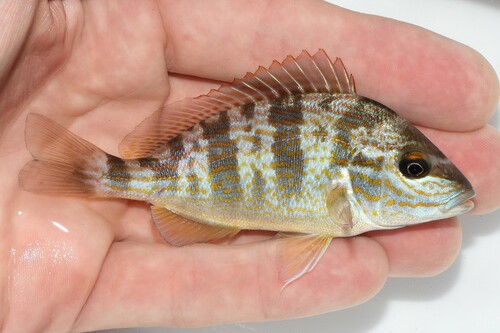
Pigfish
Orthopristis chrysoptera
Famous for the 'grunt' that gives them their name, the Pigfish is a shimmering, golden-spotted staple of Atlantic coastal waters. These social fish bring life and chatter to seagrass beds and backyard docks alike.
Quick Identification
Size
6–12 inches (15–30 cm) in length; 0.5–2 lbs (0.2–0.9 kg) in weight
Colors
Silvery or pale blue body covered in numerous yellow-brown or golden-orange spots that form irregular horizontal lines; fins are typically yellow or dusky.
Key Features
- Sloping forehead with a pointed snout
- Golden-brown spots forming horizontal stripes along the flanks
- Small mouth with a distinct reddish interior
- Oval-shaped, compressed body profile
When You’ll See Them
Behavior
Pigfish are highly social and energetic marine fish that are frequently observed in large schools, particularly during their juvenile stages. They earn their name from the unique grunting or chattering sounds they produce by rubbing their pharyngeal teeth together. This sound is amplified by their swim bladder and is most commonly heard when the fish is agitated or during competitive feeding.
These fish are cautious but curious inhabitants of coastal ecosystems. While they spend much of their time navigating the safety of seagrass meadows, they are opportunistic movers, following the tides into shallower estuaries and salt marshes to forage. In the wild, they serve as a critical mid-level link in the food chain, providing a primary food source for larger predators like snook, tarpon, and sharks.
EverydayEarth exclusive
Camera Tips
To capture high-quality footage of Pigfish, you will need an underwater camera system or an action camera with a waterproof housing. For those with coastal backyards or private docks, the best placement is along a piling roughly 2 to 5 feet below the low-tide line. Secure the camera at a downward 45-degree angle toward a sandy patch adjacent to a seagrass bed, as Pigfish are bottom-oriented foragers that love the transition zones between cover and open sand.
Using a lure is highly effective for bringing a school into the frame. A perforated PVC tube or a small mesh bag filled with crushed shrimp or commercial fish chum works wonders. Position the bait roughly 12 to 24 inches from the lens to ensure the fish stay within the focal range. Because Pigfish are known for their 'grunting,' pairing your camera with an underwater hydrophone can create a multi-sensory experience, allowing you to hear their chatter as they investigate the bait.
Lighting is the biggest challenge in estuarine environments where water clarity can fluctuate. Aim to record during 'slack tide' when sediment settles for the clearest picture. If you are recording in the early morning or late afternoon, use an underwater video light with a wide beam to fill in the shadows. Setting your camera to a higher frame rate, such as 60fps, is recommended to capture the quick, darting movements characteristic of the Pigfish as they compete for food.
Similar Species
Species that look similar or are commonly confused with Pigfish.
Frequently Asked Questions
Record Pigfish at your habitat
Connect a camera to start building your own species record — AI identifies every visitor automatically.