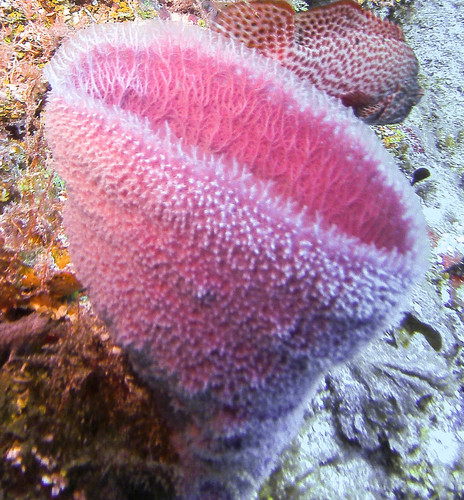
Pink Vase Sponge
Niphates digitalis
A masterpiece of marine architecture, the Pink Vase Sponge is a vibrant, living filter that provides a home for the Caribbean's smallest reef inhabitants.
Quick Identification
Size
Typically 10-50 cm (4-20 inches) in height and up to 30 cm (12 inches) in diameter
Colors
Pastel pink, lavender, or light grayish-blue with a lighter interior
Key Features
- Deep vase or funnel-shaped body
- Exterior covered in small, sharp-looking cone-like bumps (conules)
- Thin, often ragged or serrated upper rim
- Large central opening known as an osculum
When You’ll See Them
Geographic range
Where Does the Pink Vase Sponge Live?
This iconic sponge is native to the warm, tropical waters of the Western Atlantic Ocean. Its primary range encompasses the entire Caribbean Sea, with high concentrations found throughout the Florida Keys and the sprawling archipelago of the Bahamas. It is also a frequent sight on the reefs surrounding the Netherlands Antilles and along the coastal shelf of Central American countries like Belize and Mexico.
Basemap © OpenStreetMap contributors
Behavior
The Pink Vase Sponge is a stationary filter feeder that acts as a natural water purification system for the reef. It spends its entire adult life attached to a hard substrate, constantly pumping seawater through its porous walls. Using specialized cells called choanocytes, it creates a current that draws water into its body, filters out microscopic nutrients, and expels the waste through the large opening at the top.
While it may appear passive, this sponge is a bustling hub of biodiversity. It provides essential 'real estate' for a variety of small marine creatures. Brittle stars, snapping shrimp, and small fish like gobies often take up residence inside the vase or within the folds of its outer skin, finding protection from larger predators in the sponge's tough, fibrous structure.
EverydayEarth exclusive
Camera Tips
Capturing the Pink Vase Sponge requires an underwater setup, making it a unique challenge for those with 'backyard' docks or coastal property in the Caribbean and Florida. To get the best shots, mount your AI-powered camera to a weighted tripod or a permanent pier piling at a depth of 3 to 6 meters. Position the lens at a 45-degree upward angle toward the sponge; this captures the interior of the 'vase' and allows the sun’s natural rays to illuminate the translucent edges of the sponge.
Since sponges are sessile, they are perfect subjects for high-resolution time-lapse photography. Set your camera to take a photo every 30 seconds during the turn of the tide. While the sponge won't move, you will capture the fascinating 'micro-traffic' of neon gobies and tiny crustaceans that use the sponge as a home base. If your camera has AI detection, focus the trigger zone on the top opening (osculum) to capture larger fish, like parrotfish or angelfish, as they swim past the structure.
Color correction is your best friend when photographing this species. Because water absorbs red light, the Pink Vase Sponge can look gray or dull blue on camera at depth. Use a red filter on your lens or an external LED video light to bring back the vibrant lavender and pink hues. Ensure the light is positioned slightly to the side of the camera to avoid 'backscatter,' where the light reflects off floating sand or plankton directly into the lens.
Similar Species
Species that look similar or are commonly confused with Pink Vase Sponge.
Frequently Asked Questions
Record Pink Vase Sponge at your habitat
Connect a camera to start building your own species record — AI identifies every visitor automatically.